Stearns to lead collaborative $5M NSF grant strengthening STEM transfer pipeline

UNC Charlotte has received $2 million from a new $5 million National Science Foundation grant to expand a regional partnership that supports low‑income, high‑achieving students pursuing STEM degrees.
The award launches SPARC 6, a five‑institution collaboration designed to improve retention, transfer and graduation rates in biology, computer science and data science. The grant will fund scholarships for students at UNC Charlotte and four partner community colleges.
The project is led by Elizabeth Stearns, professor of sociology and director of the Public Policy Ph.D. program in UNC Charlotte’s College of Humanities & Earth and Social Sciences. Stearns, who has overseen earlier phases of the SPARC initiative, said the new funding strengthens a proven model for supporting community college students as they move into four‑year STEM programs.
“This award allows us to expand a model that supports students academically, socially and financially, from their first semester in community college through graduation at UNC Charlotte,” Stearns said. “By strengthening the bridge between two‑year and four‑year institutions, we’re helping students build the skills, networks and confidence they need to thrive in the STEM workforce.”
The expanded consortium adds Cleveland Community College and South Piedmont Community College to the existing partnership with Gaston College and Rowan‑Cabarrus Community College. Scholarship recipients will complete associate degrees at the partner colleges before transferring to UNC Charlotte.
Each community college will award five to ten scholarships annually beginning in fall 2026. Over five years, at least 120 students are expected to receive support as they progress from associate to bachelor’s degrees.
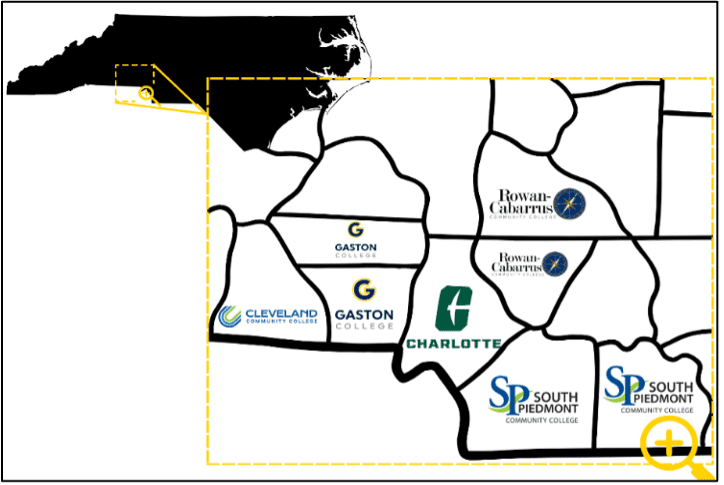
SPARC 6 will provide scholarships, proactive advising, faculty and peer mentoring, undergraduate research opportunities and cohorted coursework.
The research team, led by Stearns, will study factors that influence successful transfer, including mentoring relationships, academic integration and the role of social and cultural capital.
The new grant builds on strong outcomes from the earlier SPARC 4 initiative. At Gaston College, 83% of SPARC students graduated and 87% transferred to a university, with many completing bachelor’s degrees.
UNC Charlotte and its partners will also host joint programming, including undergraduate research symposia, faculty development workshops and a shared S‑STEM orientation. New research‑based courses aligned with statewide articulation agreements will help streamline credit transfer.