Martha Cary (Missy) Eppes discusses Beth Haven Flatrock with The Charlotte Observer
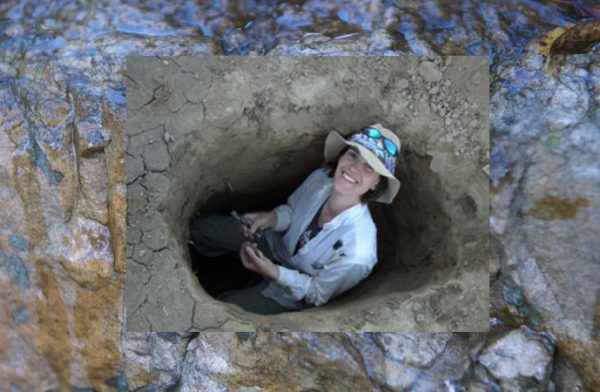
Martha Cary (Missy) Eppes, Ph.D., professor in the Department of Earth, Environmental and Geographical Sciences, discussed the Beth Haven Flatrock with The Charlotte Observer for the article “Sprawling rock hidden in North Carolina woods began as trapped magma, experts say.”
The Beth Haven Flatrock in Lincoln County, North Carolina, is a rare granite outcrop where extreme heat can cause the rock to expand, crack and peel apart, a geologic process known as exfoliation. The 250‑ to 350‑million‑year‑old formation began as magma trapped beneath a massive mountain range that once rivaled the Himalayas. Over time, the mountains eroded, leaving behind the granite surface that now sits almost level with the surrounding forest.
The Beth Haven Flatrock and its surrounding 150 acres were acquired in March through a partnership among the Foothills Conservancy of North Carolina, Catawba Lands Conservancy and The Conservation Fund.
Exfoliation events
Scientists are increasingly interested in these granitic formations because rising temperatures can trigger spontaneous cracking events, some of which have been captured on video in other parts of the country. Eppes participated in the 2018 study Thermal influences on spontaneous rock dome exfoliation, and visited the site in April where she identified detached sheets consistent with exfoliation.
“There have not been enough of these events to know how to precisely predict them, but it is our hypothesis that extreme temperatures will cause more such events,” Eppes told The Charlotte Observer. “The reason is that once you expose a rock to a certain temperature, it will crack in response to that temperature, but the next time you heat it up, it will not crack again until you exceed the previous temperature. This is called stress memory. It is a commonly documented phenomenon in rock and in fracture mechanics generally.”
A ‘geological island’
In addition to the flatrock, the site is ecologically significant because it hosts rare plant communities. The site was previously missed by state flatrock surveys, making the Foothills Conservancy announcement a revelation to researchers. Conservationists describe it as a “geological island,” distinct from other North Carolina flatrocks that have been degraded by heavy foot traffic.
“The pristine nature of the Lincoln County site really impressed me. It made me [realize] that the other sites I have been to have been completely scrubbed clean of vegetation in many ways,” Eppes said. “It also impressed me because it was this small little ecological and geological island hidden away in a very typical southern Piedmont forest.”