Remembering Jeffrey Leak, beloved UNC Charlotte professor
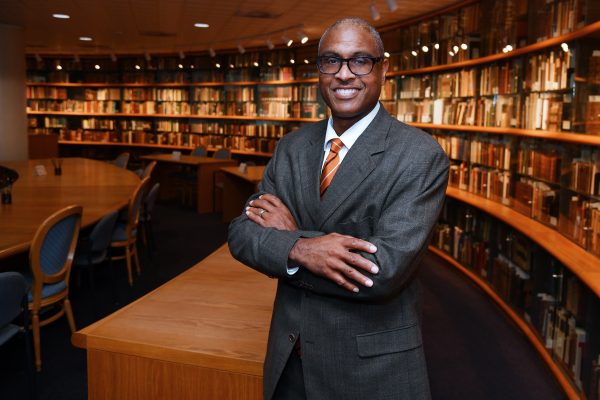
Jeffrey B. Leak, a longtime professor of English and Africana Studies whose mentorship and leadership shaped generations of UNC Charlotte students and colleagues, died June 29, after a two‑year illness. He was 57.
Across nearly three decades at the University, Leak became a cornerstone of campus life. His work as a scholar illuminated Black literature and culture. He was known as a community builder whose generosity, insight and steady guidance left a lasting imprint on programs, people and the institution itself. Colleagues remember him as a rare kind of leader: someone who listened deeply, affirmed others, and quietly strengthened every space he entered, from faculty governance and interdisciplinary initiatives to athletics and student support.
Those who worked alongside him say his influence extended far beyond titles or committees. He was the person who remembered your story, checked in when you needed it, and helped you see your own potential more clearly. His impact endures in the students he mentored, the programs he shaped, and the colleagues who continue to carry forward his example of kindness, rigor and service.
More Reflections on Leak’s impactful life
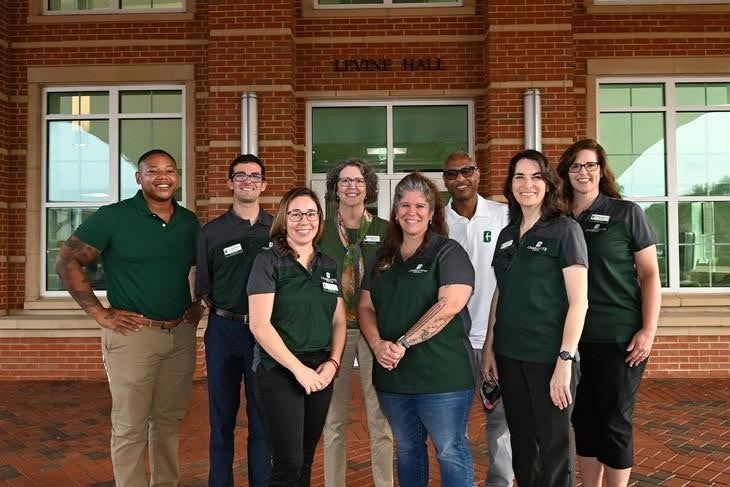
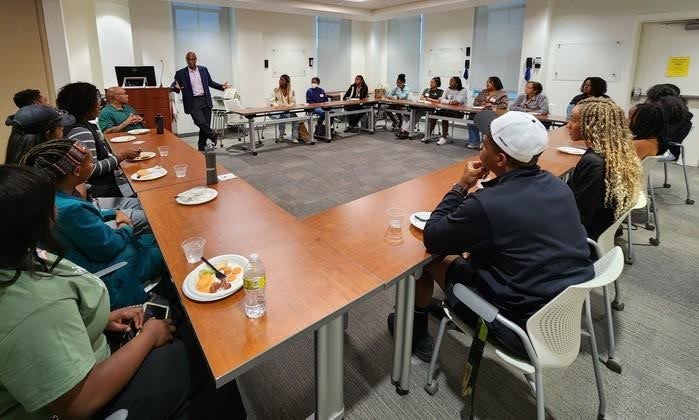
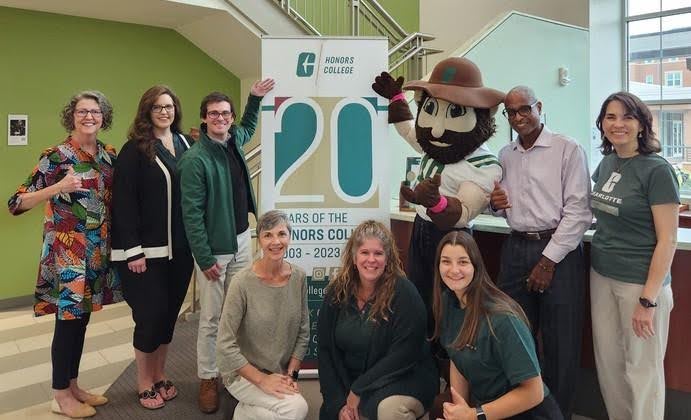
The Center for the Study of the New South
Ashli Q. Stokes, Ph.D.:
On the face of it, Jeff and I didn’t have much in common. He grew up in Charlotte, went to a large high school, excelled in basketball, attended a small university for his bachelor’s degree, and engaged in scholarship different from mine. I grew up in the Southwest Virginia mountains, went to a small rural high school, spent one middle school season as a plodder, making the basketball team as a center only for my height, and attended large public universities. And yet, Jeff and I immediately connected, where a meeting that could have taken fifteen minutes found us talking and laughing an hour later. We talked about books. We talked about our kids, my daughter and his son the same age and both involved in athletics. And, we talked a lot about food. Like me, Jeff had a fondness for Southern delicacies, introducing me to Charlotte’s Mert’s Heart and Soul, and its owner, James Bazelle. He turned me on to Mert’s Soul Rolls, egg roll wraps filled with black-eyed peas and collard greens, and its cornbread, sweet and unlike my mom’s recipe, but still delicious, and serving as yet another topic of conversation between the two of us.
Following some of these conversations filled with jokes about which version of a Southern dish was “better,” Jeff convinced me to serve as the Director of the Center for the Study of the New South following his tenure, offering opportunity and challenge alike. Jeff’s focus on expanding the reach of the Center’s programming, featuring public scholarship that allowed Charlotteans of all sorts to connect with the University and its mission, meant that I had a tough act to follow. Jeff invited James Beard Award Winning author Adrian Miller to speak, whose book about Soul Food influenced my own and whose event (catered by Mert’s with those Soul Rolls) provided the opportunity to meet Adrian and eventually count him among my friends. Adrian wrote a blurb for a recent book of mine, and really, that’s probably due to Jeff’s powerful ability to serve as a connector all those years ago. He remembered things. He had a talent in drawing out what excited you and others. He found links between people who seemed very different from each other. Jeff led with kindness, humor, and curiosity, qualities that I tried to embody as Center Director and ones that I continue to aspire to when faced with the challenges of leadership. Over time, seemingly offhanded conversations about favorite foods led to powerful connections between Jeff and me, and then with others, such as the Center’s next Director, Dr. Janaka Lewis, who shared our love of Southern fare and Southern scholarship. These ties helped the Center continue to showcase speakers who “got” the contemporary South and Charlotte’s place within it. I may not be able to sit down with Jeff and argue about where to eat in Charlotte when cravings for old school Southern food hit; but when I do, I’ll think about him, and his ability to connect so many of us, when I take a bite.
Janaka B. Lewis, Ph.D.:
Having already worked with Jeff as a colleague in the Department of English for over a decade when I followed Ashli’s directorship of the Center, it continued to serve as a natural space for us to continue discussions of his origins in Charlotte and my growing love of the city in which, like so many, I was a transplant. We shared now hundreds of students across our field of African American Literature, his specialization around the Harlem Renaissance and making artists and writers such as Henry Dumas more visible, mine in 18th and 19th century women writers, with a focus on Southern literature and culture. We also shared connections from another Southern city, Atlanta, from where I moved to assume the Assistant Professorship in Early African American Literature at Charlotte and where Jeffrey attended Emory University for graduate school. All things Charlotte, from up and down the 85 corridor, came up in CSNS programming and events—family narratives, art, the growth of Charlotte, sports, educational systems and narratives, and, of course, Southern foods and food history.
Every Center event through his and Ashli’s tenure, most held at the Levine Museum of the New South, featured a southern meal or bites, often from Mert’s Heart & Soul (a Charlotte staple whose owners the Bazzelles hailed from my mother’s hometown of Athens, Georgia—note, Ashli, Jeff, and I also shared Georgia food notes). But Jeff also represented his Charlotte hometown foods in English department potlucks (winter and end of year celebrations), where he always signed up to bring the same thing, a box of fried chicken from Price’s Chicken Coop. No sides needed (although plenty were available in the spread), just hot, fresh crispy chicken. Price’s closed in 2021 during the COVID-19 pandemic after being open 59 years, but those memories of food as a source of comfort, celebration, gathering, and yes, fulfillment, with Jeffrey as the steering director, remain, as does his legacy of bringing UNC Charlotte and the greater Charlotte community together, one bite at a time.
Department of English colleagues
Mark I. West, Ph.D.:
I met Jeffrey when he came for his interview, so I’ve known him since the day he set foot on our campus. He had very deep roots in Charlotte itself, and he always credited the public library as giving him an opportunity to exercise that intellectual curiosity and that sense of wanting to excel as a student. In the library, he could be a geeky book boy who liked to read books. He had a tremendous interest in biography and especially autobiography, and his scholarship and his teaching always spoke to each other. They were not separate enterprises. His first monograph was about the portrayal of masculinity in African American literature. He would talk about how race relations impacted individual lives, not just some kind of abstract sociological sort of thing. In the library, he didn’t have to play into the role of what a teenage boy was supposed to be doing in the neighborhood at that particular time.
For Jeffrey, his interest in the city and the community of Charlotte was deep‑seated. It was just part of who he was. He felt like he came from this community, and he wanted to give back to the community. He knew everybody. He was very well connected and he would draw on that. He cared deeply about his church and did things in the context of the role he played there, especially for people he knew.
He was always trying to get conversations started and show what we have in common. He had a kind of political instinct for bringing people together, but not for his own glory. What motivated Jeffrey was a deep sense of citizenship: being an engaged person with your community and putting in the time and effort to make a difference. He was a very, very dedicated family person, and very, very dedicated to his kids. When we talked, we mostly talked about our kids. That was a very important part of him — his role as a husband and as a father.
Pilar Blitvich, Ph.D.:
It was always such a pleasure to run into Jeffrey in the department. He was elegant in every sense of the word. He exuded calm and friendliness; he always had a smile, always had time to stop and chat, and always asked about your family, how things were going, and life beyond academia. He was a good colleague, a good man, and I will miss him.
Katie Hogan, Ph.D.:
I first met Jeffrey in the English Department office on a Saturday afternoon in July 2014. I had recently moved to Charlotte to begin a new job, and we were both wandering around the department. I was new to the city and to UNC Charlotte, and I remember how warm and friendly he was, sharing a bit about a university/community collaborative program he was organizing for the fall semester. What I also remember about Jeffrey was the way he reached out to students. I often saw him walking with students, asking them how their semesters were going. Jeffrey was easy-going and “real” with students and colleagues alike, drawing us in and helping us to feel connected. An outstanding scholar, teacher, and proponent of service, Jeffrey was an inspiration to all of us.
Bryn Chancellor, Ph.D.:
Jeffrey was a warm, inspiring presence in the department. Because he was such a distinguished scholar, I was a bit awestruck by him when I first came to Charlotte, but Jeffrey was always welcoming, down-to-earth, and good humored in our interactions as well as a generous mentor and colleague. I looked up to him enormously. His absence will loom large. Rest in peace, Jeffrey.
Former students
Torie Wheatley, Ph.D.:
“Right, right,” is the warm and heartfelt affirmation Dr. Leak often said to his students, simple yet powerful. In times of great sadness, tragedy and grief, those words mean something more now than ever. When we are missing you, Dr. Leak, your confirmation that it is ‘right’ will forever resonate. It is ‘right’ in the plan of God, it is ‘right’ that we are all forever connected through the memory of Dr. Leak, and it is ‘right’ and righteous the life that Dr. Leak lived and will forever live. After almost two decades since I have had his class, I can still vividly hear his words of wisdom as if it were my first day of African American literature in 2011. Dr. Leak, you will forever have this lasting presence on earth through your love, influence and impact. Knowing that God has his soldier and we have an angel brings a little comfort knowing that we will be “right, right.”
Toye Watson:
Brilliant, magnanimous and beautifully talented. My favorite professor, Jeffrey Leak, is now an ancestor, and what at first filled me with sadness has turned to such profound gratitude. Dr. Leak met us at the door with his wonderful smile, hiding the demanding list of books required for our African American autobiography course. And read we did, from Frederick Douglass to Harriet Jacobs, W.E.B. Du Bois, Richard Wright, Malcolm X and Assata Shakur. He would mix his wit and poignant stories of how we shouldn’t relegate Black stories to just resilience but “find the joy,” he would say. He would often stop and ask us, “Where in the story do you think they have tears that cry hallelujah?”
He gave me such a gift by demanding that I read Hurston out loud; you have to feel the power of her words.’ He made me stand up in class and read with him that wonderful grocery store scene in “Their Eyes Were Watching God.” I read Janie’s part, and he read Joe Starks. I devoured her work, and she is my favorite author to this day. Dr. Leak made me want to teach literature, so I became an educator. I had seventh graders reading “Sweat” by Hurston out loud… and he was right, they loved it. What a wonderful life to leave a legacy filled with young folks finding joy in reading about their stories. I am eternally grateful for being your student. Rest well. I hope you are laughing with all the literary greats!
Jeremiah Morris:
Dr. Leak played a significant role in my decision to pursue a Ph.D. in Curriculum and Instruction with a concentration in Urban Education. He helped me see that scholarship is not just about studying literature — it is about asking meaningful questions, serving communities and using education to make a difference. His belief in me gave me the confidence to pursue a path I once thought was beyond my reach. Thank you, Dr. Leak, for believing in your students, opening doors, sharing your wisdom and investing in our futures. Your legacy will continue to live on through the countless students whose lives you transformed, including mine.
Ronnie Moore:
There are some people who teach literature, and then there are those who become a part of your own story. Dr. Leak was that for me. As my first African American pastor and professor, he embodied the beauty of Black intellect, charisma and unwavering faith. His classroom was never just about American literature, it was about seeing ourselves within it. I still remember reading “An American Marriage” by Tayari Jones together.
Through his insight, our conversations reached far beyond the pages, into the truths of American literature, Black history — our history — and the power of naming, questioning and reclaiming our place within it. The wisdom he shared, the declarations he made and the realizations he inspired are gifts I will carry with me for the rest of my life. He taught with conviction, compassion and a presence that made every lesson feel sacred.
I’m sending my deepest love and condolences to his family. Above all, I hope you know the immeasurable impact he had on so many of his students. His words, his spirit and his legacy live on in each of us who had the privilege of learning from him.
Written by Jeffrey Leak’s friends and Jenn Conway
Photos by Wade Bruton and courtesy of colleagues and the Honors College