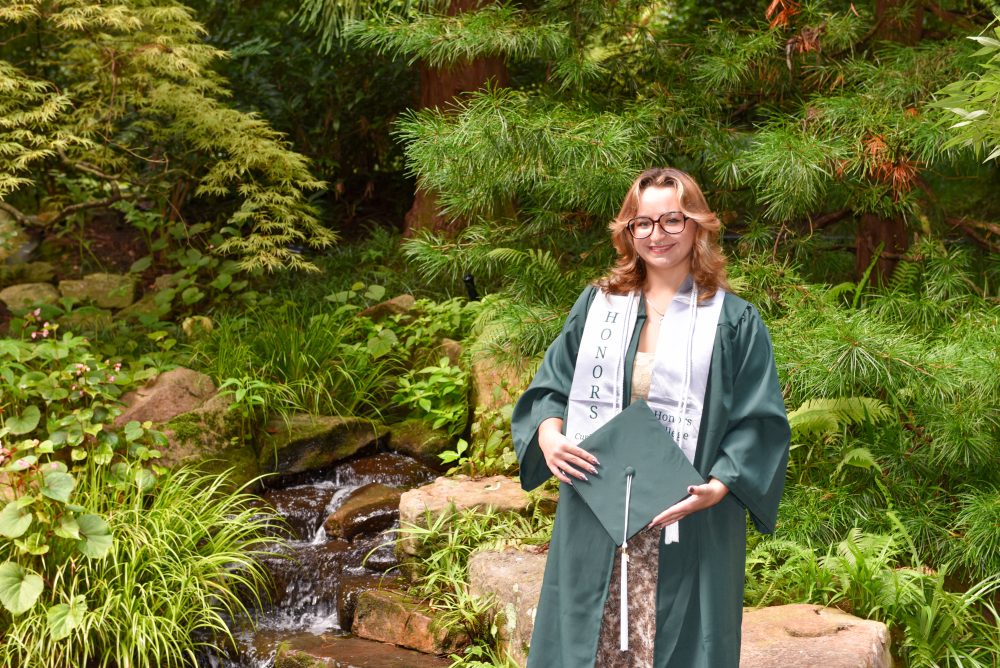
Hands-on anthropology research at UNC Charlotte propels Mayah Clark’s student success
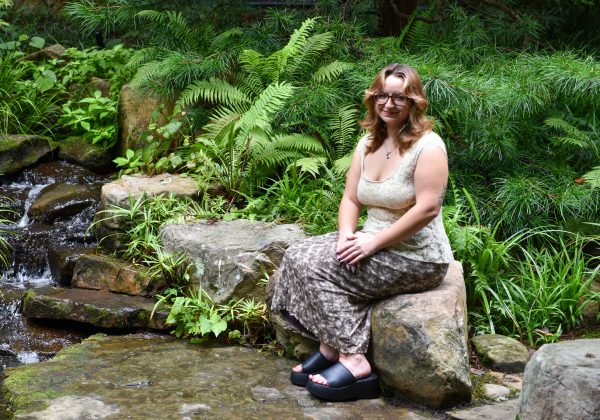
Mayah Clark’s path to the University of North Carolina at Charlotte began just 30 minutes down the road in Gastonia, but the distance she traveled academically and personally during her four years on campus stretches much farther. She arrived seeking a university with a strong anthropology program, access to the vibrancy of Charlotte, and the ability to remain close to her family. When UNC Charlotte offered her admission, she said the decision “seemed like an easy choice.”
Growing up in museums
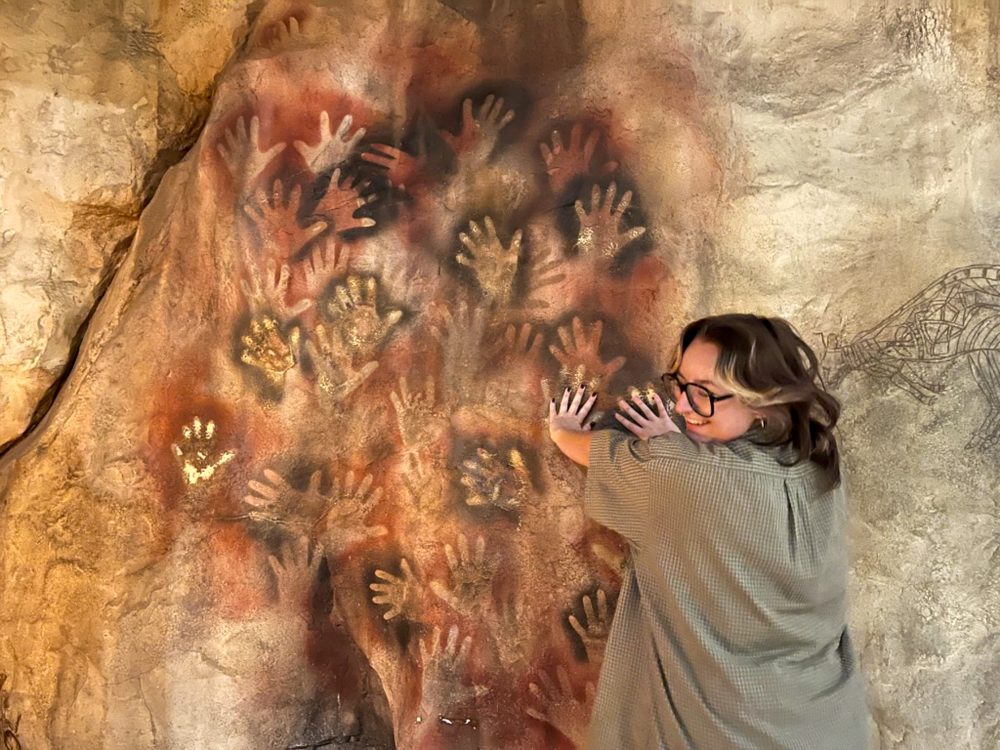
Clark’s fascination with anthropology traces back to childhood visits to the Schiele Museum of Natural History. She later volunteered there, teaching programs on Native American history and archaeology. “I loved the process of learning, teaching and engaging with visitors,” she said. “I knew from then on that anthropology was the field for me.”
Academic mentorship helped find the path
At UNC Charlotte and in the College of Humanities & Earth and Social Sciences, Clark found mentors who shaped her academic identity. She cites Sara Juengst, Ph.D., as the most influential figure in her college experience. “I had no idea what went into the process of researching or what the overall landscape of academia was like,” she said. “She introduced me to so many different opportunities and ideas.”
She also credits Lydia Light, who is now at the University of Miami, for encouraging her to join the departmental honors program. “For whatever reason, she saw something in me,” Clark said.
Courses taught by faculty such as Andrew Keener, Ph.D., from the Honors College, and CHESS faculty Blue Murillo, M.A., and Alexandra Kaloyanides, Ph.D., associate professor of religious studies, helped her develop a wide-ranging academic lens. From osteology to sensory cultures of religion, she said these classes “were incredibly impactful” and shaped her approach to research.
“Mayah has been such a joy to work with,” said Juengst. “She is the type of student who thinks about the bigger picture and is able to pull together multiple types of knowledge to answer complicated questions.”
A two-year research project and scholarship support
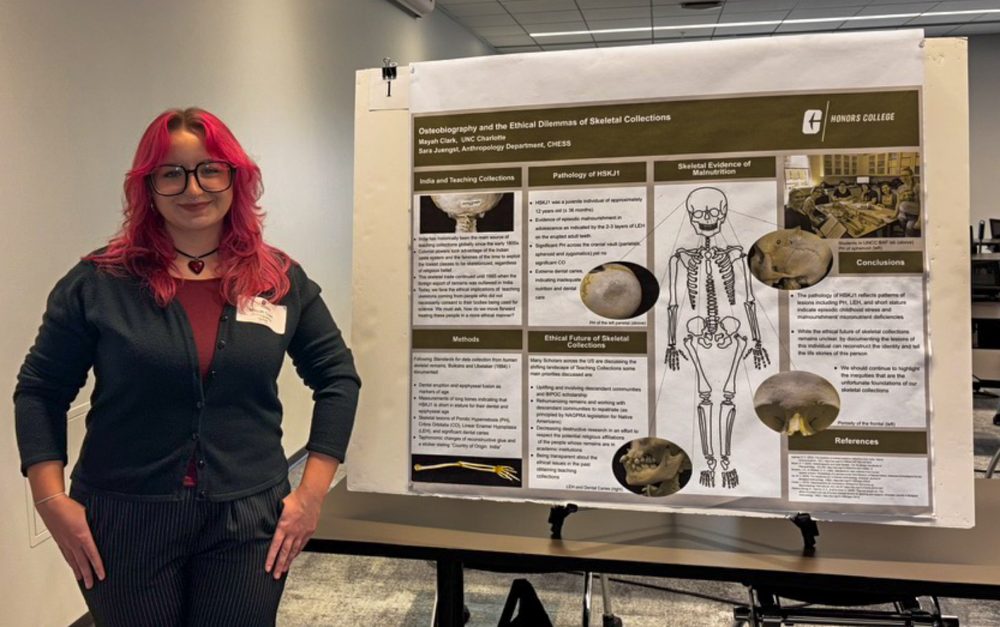
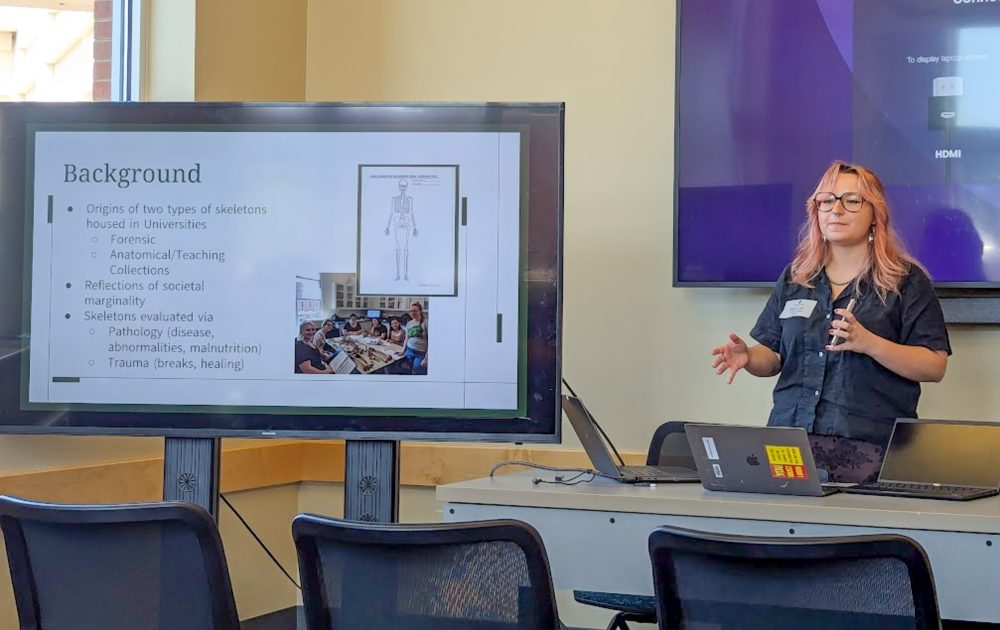
Clark’s honors thesis became the centerpiece of her undergraduate career. Juengst encouraged her to investigate a juvenile skeleton in the university’s teaching collection, known as HSKJ1. The project grew into a two-year study of ethical issues surrounding anatomical collections in universities.
“Using skeletal evidence of malnutrition, I evaluated how their remains were a microcosm for the exploitation incurred in the Indian skeletal trade of the 20th century,” she said.
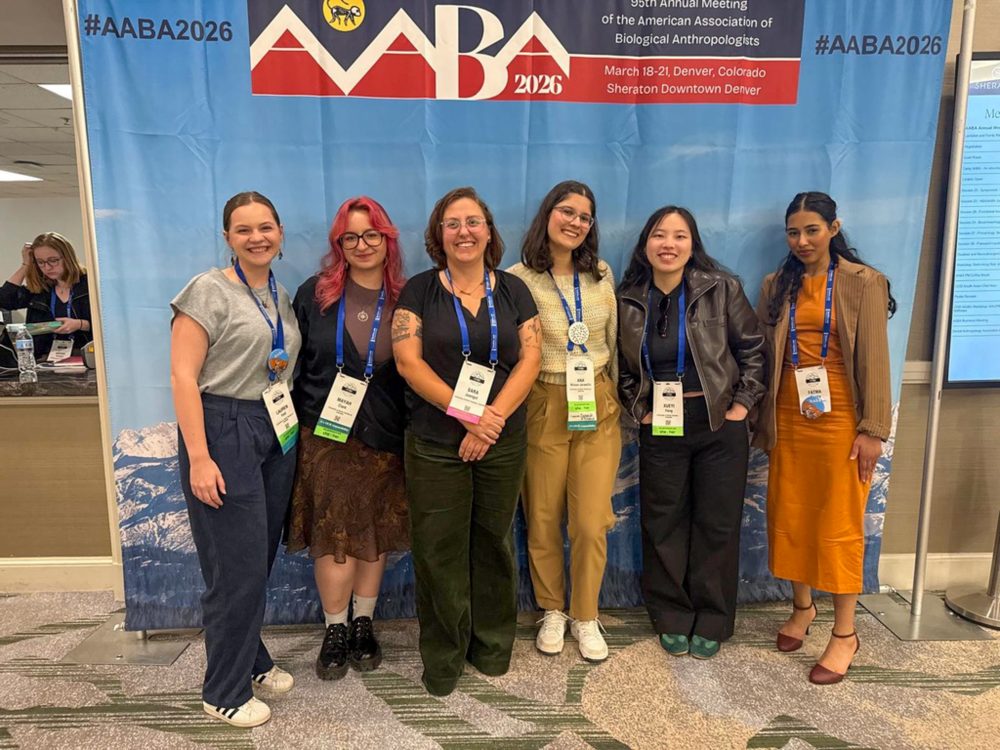
She presented her research, “Osteobiography and the Ethical Dilemmas of Teaching Skeletons,” at the Association of American Biological Anthropologists, the Southeastern Biological Anthropology Interest Group and UNC Charlotte’s Undergraduate Research Symposium.
“Her honors thesis was a mature blend of rigorous scientific techniques, philosophical questions about our obligations to each other, and ethical approaches to handling human skeletons,” said Juengst. “Mayah is an exemplary Niner and I know will make us proud as an alumna.”
Clark also completed a second major research project as an Office of Undergraduate Research scholar in the Bioarchaeology and Forensic Anthropology Lab, comparing skeletal pathology in forensic and anatomical collections. “It made me feel like a real anthropologist,” she said.
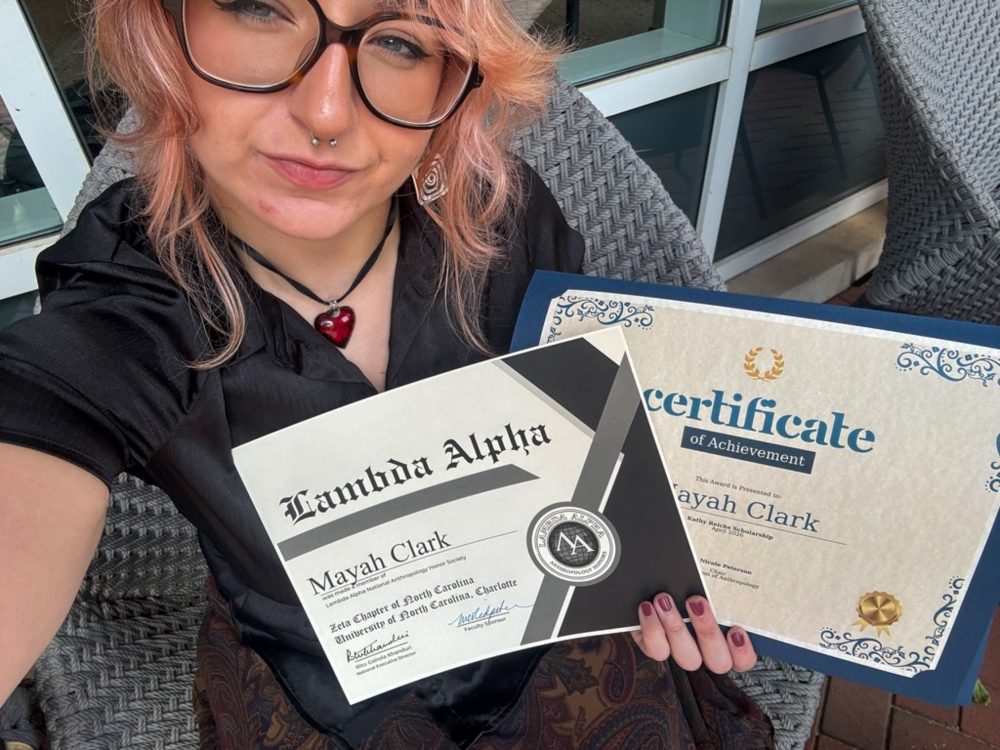
Her impressive research and work in that lab led to Clark receiving the Kathy Reichs Scholarship for two consecutive years. Clark was among a handful of students selected for the scholarship named in honor of Reichs, professor emerita of anthropology at UNC Charlotte, forensic anthropologist, and the best-selling crime writer known for inspiring the television series “Bones.”
Hands-on archaeology and campus involvement
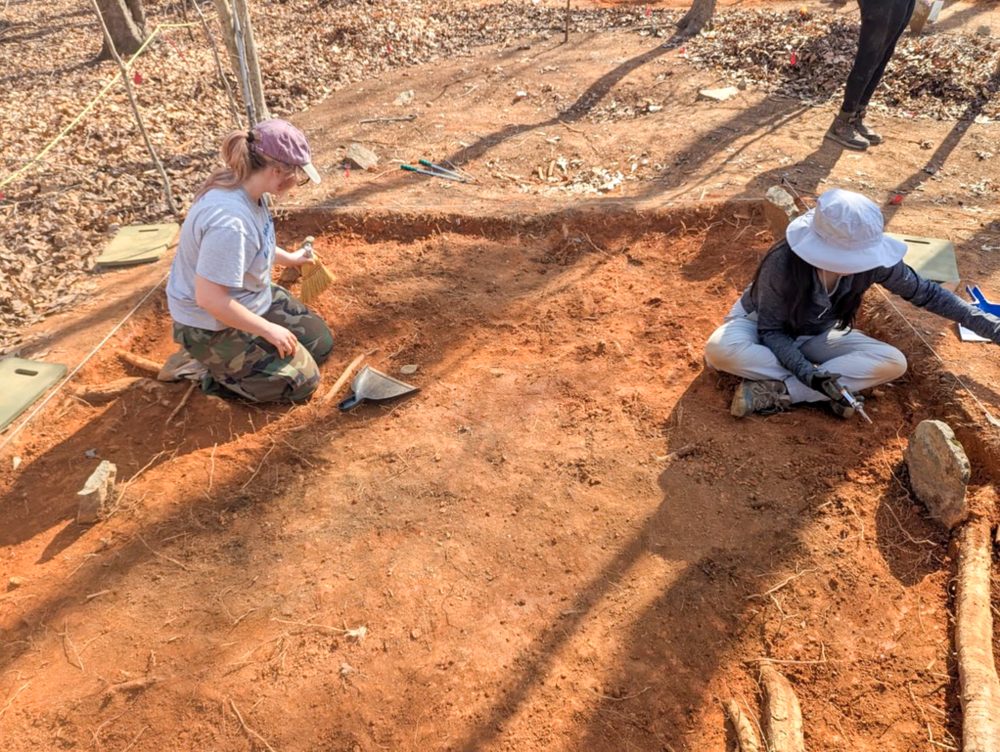
Her experience extended beyond campus through a volunteer archaeological dig with NC State University, investigating an African-American burial ground dating to the 1860s. Clark described it as a “very interesting and fulfilling experience.”
On campus, Clark worked at the Rowe Art Galleries, served as a teaching intern, and volunteered with KidsFest, the Women’s and Gender Studies program and Nova Literary-Arts Magazine in Student Niner Media. “I loved being able to engage with art and branch out by getting to know the CoA+A faculty and students,” she said.
One of her favorite memories came from a class with Kaloyanides, where students, including Erik Waterkotte, associate professor of art, wrote down something they wanted to let go of. Waterkotte collected those sentiments from the class, burned the papers and used the ashes in his artwork. “It felt really special to be in a class where I could learn and be challenged academically and be a member of a community,” Clark said.
Support systems and self-discovery
As a first-generation college student, Clark said her mother’s support was essential. “She never told me I couldn’t be anything I wanted to be,” she said.
She also leaned on friends Hannah Yarrington and Camille Paterson, both recent UNC Charlotte graduates. “They were always there when I needed a study buddy, caffeine and a good laugh.”
Her biggest lesson from college: don’t underestimate yourself. “I learned I usually end up disproving my own doubts about myself,” Clark said.
What she’ll miss about Charlotte
Clark said she will miss the energy of campus life most. “I love being able to walk around and observe campus life. I will definitely miss the liveliness of UNC Charlotte,” she said.
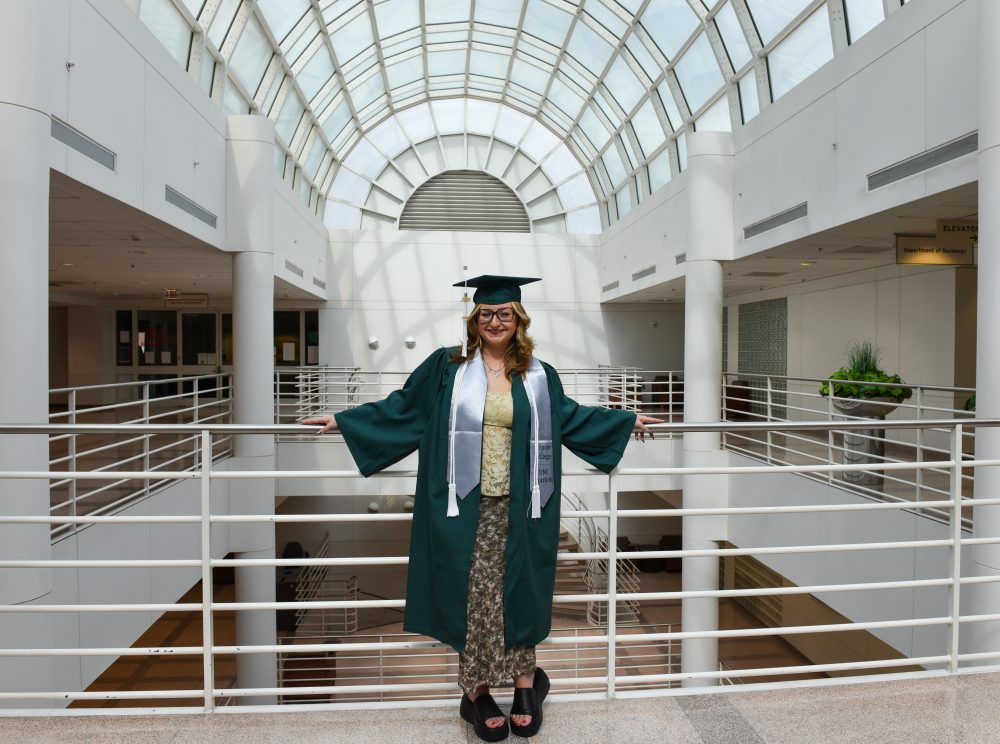
She plans to celebrate graduation with family and friends, followed by a long nap. “All that embracing my college life took a lot of energy out of me,” she joked.
Looking ahead, Clark hopes to pursue a Ph.D. in biological archaeology and ethical curation. She also hopes to travel and learn from cultures around the world. “As long as I am able to continue to be involved in the anthropological community, working with other scholars and researching, I welcome any new opportunities,” Clark said.
Written by Jenn Conway
Photos by Jenn Conway and courtesy of Mayah Clark