Three CHESS faculty named finalists for UNC Charlotte Teaching Excellence Awards
Three faculty members in the College of Humanities & Earth and Social Sciences have been named finalists for UNC Charlotte’s 2026 Teaching Excellence Awards, reflecting the college’s commitment to innovative instruction, student success and transformative learning experiences.
Erin Basinger, professor and chair of communication studies, is a finalist in the tenured faculty category. Sayde Brais, teaching professor of communication studies, and Oscar Lansen, teaching professor of history, are finalists in the teaching-focused faculty category. Debra Smith also received honorable mention recognition for the tenured faculty award.
Award recipients will be announced Sept. 24 during a reception in the Popp Martin Student Union.
The recognition continues a tradition of teaching excellence within CHESS in both the tenure track and teaching-focused categories. Last year, CHESS faculty members Bill Graves and Susana Cisneros earned UNC Charlotte’s top teaching honors in their respective categories.
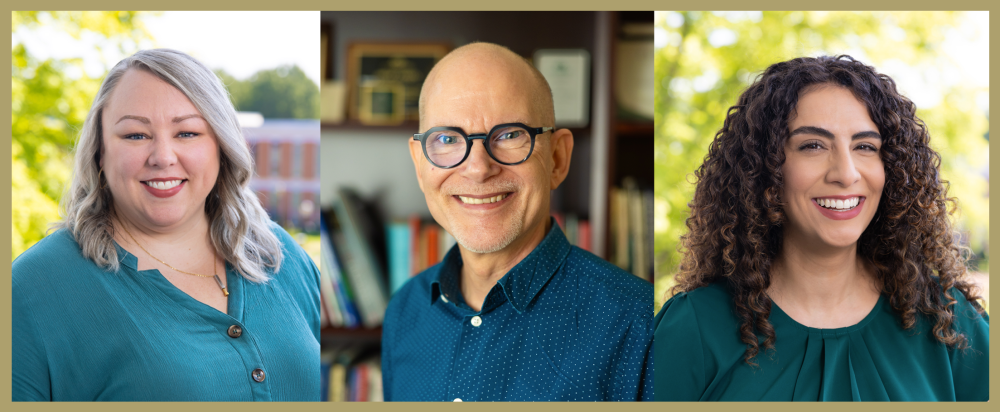
Basinger recognized for transformative teaching and mentorship
Basinger’s teaching is grounded in a pedagogy of care that transforms the classroom into a collaborative, relationship-driven learning community. By inviting students to help shape class values and expectations while balancing compassion with accountability, she creates environments where students feel respected, empowered and engaged.

She challenges students to connect communication theory to real-world contexts through innovative learning experiences, including arts-based activities and public-facing health communication projects. Her approach emphasizes both academic growth and the development of transferable skills that prepare students for life beyond the classroom.
“I feel lucky to be in a profession that asks me to be thoughtful and critical in how I make decisions related to teaching,” Basinger said. “I have worked over the years to hone my approach to teaching, and a pedagogy of care allows me to embody my work as a teacher authentically and with respect for myself, my students and the goals of higher education.”
A leader in curriculum innovation, Basinger has developed more than a dozen new courses that have strengthened undergraduate and graduate offerings in communication studies. She also is a highly sought-after mentor, having advised nearly 20 capstone projects, co-directed a doctoral dissertation and served on close to 50 committees across programs and disciplines.
“Dr. Basinger is admirably methodical, thorough and creative, inspiring all of her students to become both better students and better people,” said graduate student Ana Krstanovic.
From 2020 to 2024, Basinger served as graduate program director for communication studies, providing strategic leadership for the program while supporting student and faculty success. In 2022, she received the Bonnie Cone Early Career Professorship, one of UNC Charlotte’s highest honors recognizing exceptional commitment to teaching early in an academic career.
“Students are drawn to her as a uniquely conscientious and humane faculty member who consistently lives out her commitment to mutual respect in mentoring relationships,” said Daniel Grano, past chair of the Department of Communication Studies.
Brais fosters belonging through a student-centered approach
Brais’ teaching philosophy is rooted in a pedagogy of care that recognizes students as individuals while encouraging them to challenge themselves academically and personally. She prioritizes student-centered learning and creates supportive classroom environments where students can take intellectual risks, build confidence and engage authentically in their education.
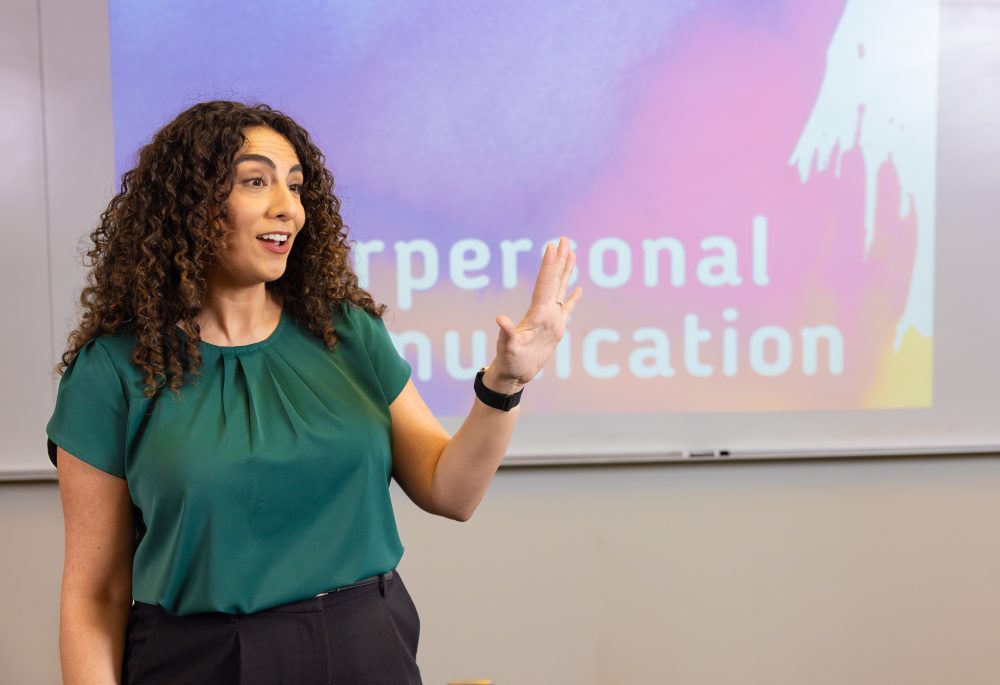
“Taking a course is not always simply a requirement or a prerequisite, but an opportunity for each student to take something away from that course and its instructor,” Brais said. “My goal is for students to feel that each course they take with me is not only beneficial to their professional endeavors but also an enjoyable, fulfilling experience on a personal level.”
Brais has led initiatives that have strengthened student success in key communication studies courses. Through a yearlong Student Experience Project intervention in COMM 2100, she helped reduce DFW rates and improve students’ sense of belonging. She also redesigned COMM 3100 by creating an applications-focused workbook that makes research methods more accessible while supporting graduate teaching assistants who facilitate breakout sessions.
“Brais teaches with clarity, creativity and structure,” said undergraduate student Ronald Bautista. “Her passion for communication inspires curiosity and confidence, and she challenges students to think critically and express themselves better.”
Beyond the classroom, Brais has served as LEADS Program Faculty Fellow since 2017 and previously coordinated the SUCCESS Learning Community. Her service also includes contributions to TOP Teachers, the Provost’s Student Success Working Group and the Student Experience Project.
“She is a true teaching and mentoring leader in our department, in the College of Humanities & Earth and Social Sciences and at the university,” Grano said.
Lansen brings history to life through hands-on learning
Lansen was recognized for an apprenticeship-style approach that transforms the history classroom into a collaborative laboratory. Drawing on decades of experience in problem-based learning and source-driven pedagogy, he models assignments alongside students and guides them through visual analysis, writing and structured discussion.
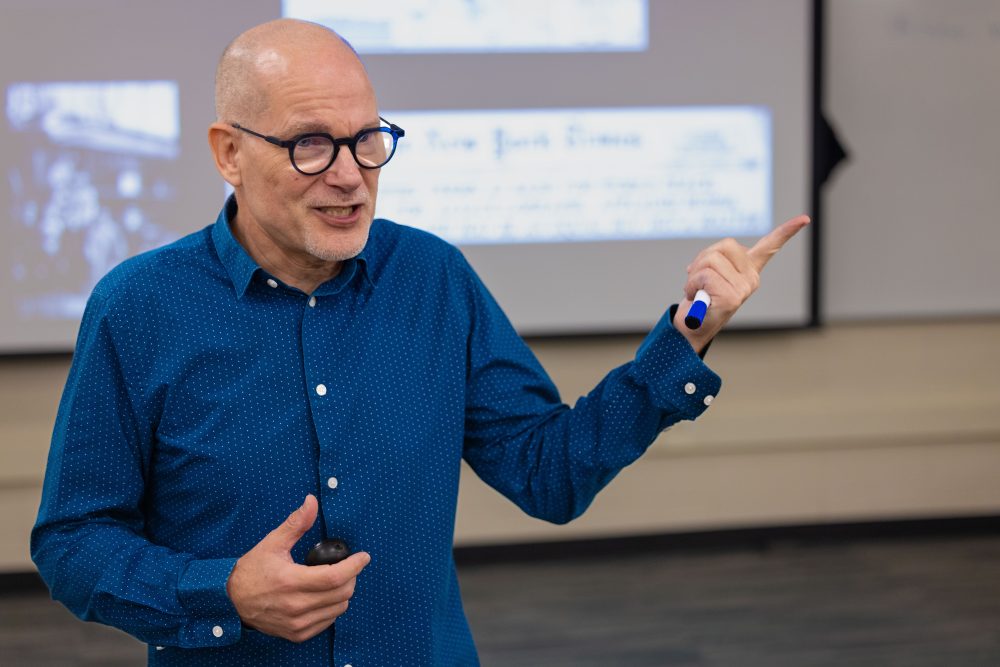
“My passion for teaching, guided by my European training and expertise in history, history pedagogy and teaching, continues to motivate my research, didactical collaboration and instructional innovation,” Lansen said. “I am fortunate to have been given the opportunity over my career to help shape the lives of others, optimize instruction and programs, lower barriers to learning, instill growth and perseverance, share expertise and skills, model inquiry and promote student well-being.”
Known for innovative instruction in courses covering the Holocaust, Nazi Germany and modern conflict, Lansen uses active learning and visual-spatial analysis to help students become engaged scholars and independent thinkers.
“Lansen’s teaching style was both rigorous and engaging, and he had a way of making history not only about content but about forming independent thought,” said history student Tabitha Crowe. “Rather than telling students what to believe, he showed us how to construct our own interpretations of the past, which fostered curiosity and critical thinking.”
His impact extends beyond the classroom. As co-chair of Commencement and former chair of the Honors Council, College Curriculum Committee and departmental undergraduate studies, Lansen has helped shape academic policy and student success initiatives across the university. He also helped establish the Charlotte Teacher Institute, the History Freshmen Learning Community and a need-based study abroad scholarship.
“From visual analysis to experiential learning to team teaching and learning, he has set new standards for innovative teaching practices in a field long dominated by lecture courses,” said Amanda Pipkin, chair of the Department of History.