Writing Resource Center celebrates 50 years of supporting writers at UNC Charlotte
For 50 years, UNC Charlotte’s Writing Resource Center has helped students become stronger, more confident writers, supporting generations of Niners as they navigated coursework, graduate school applications, scholarship essays and prepared their writing for career opportunities.
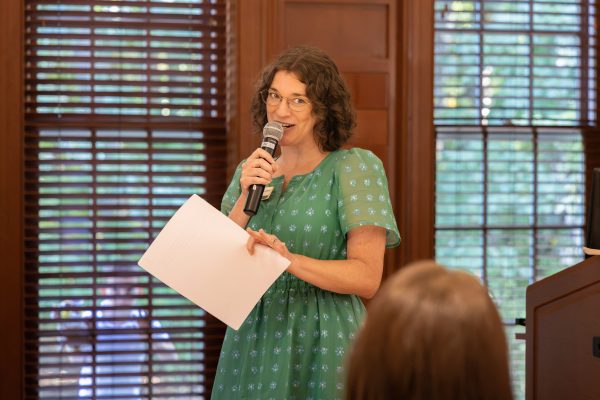
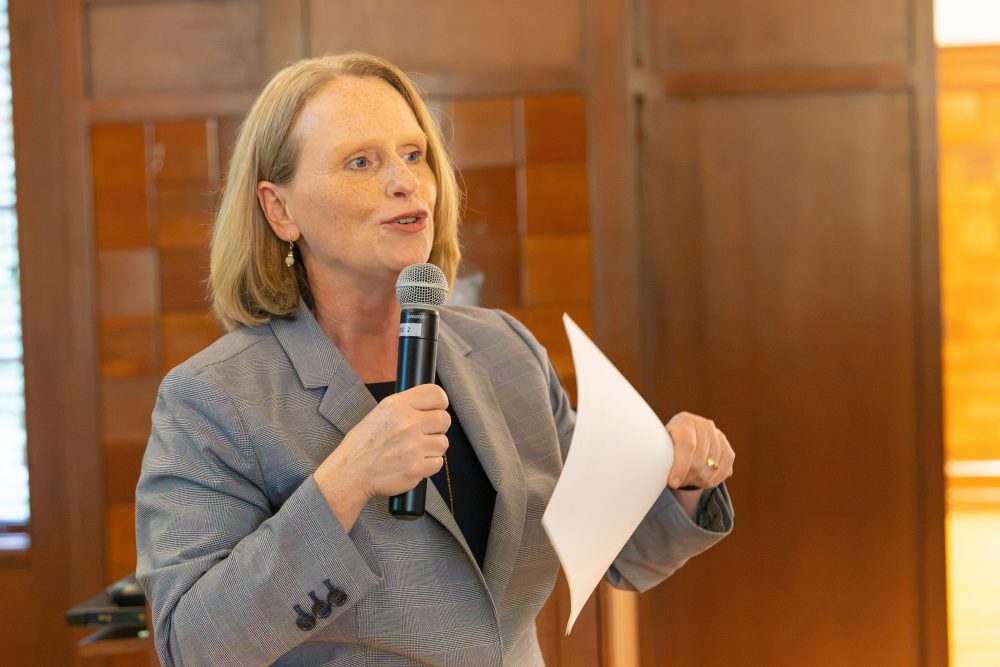
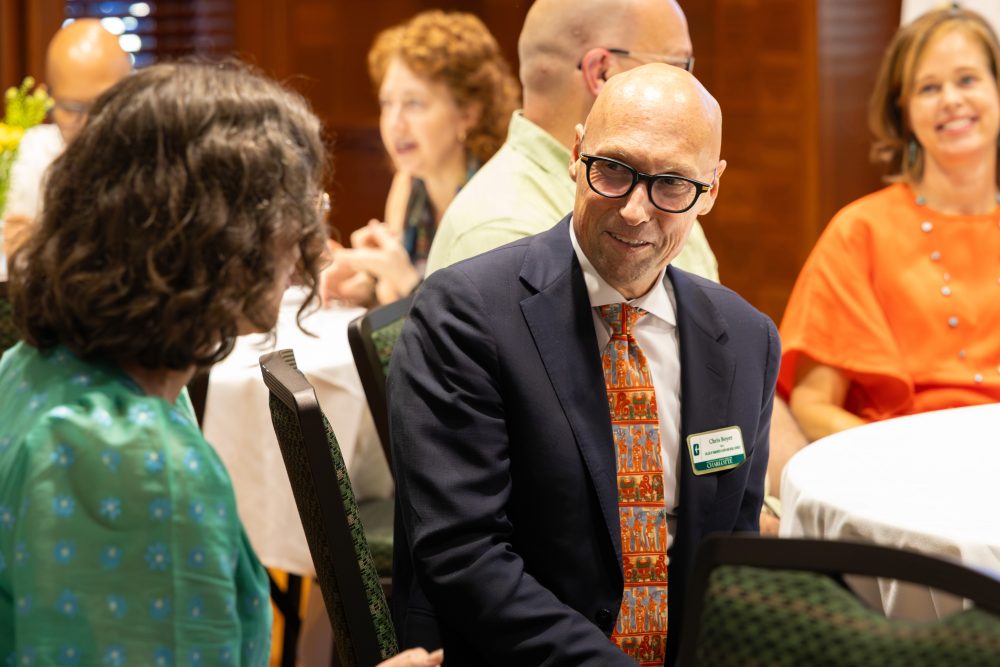
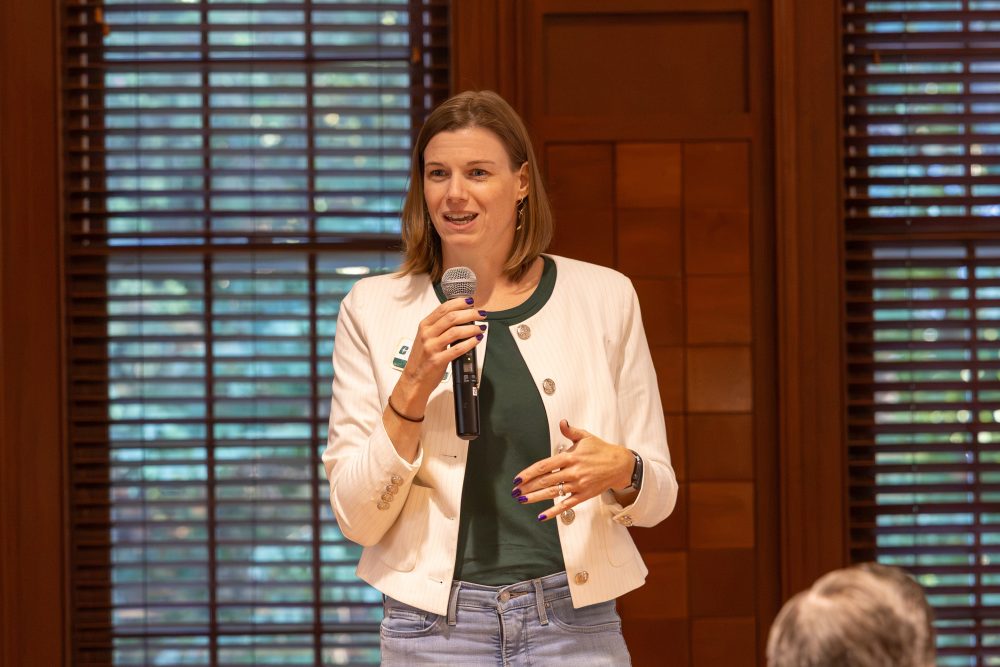
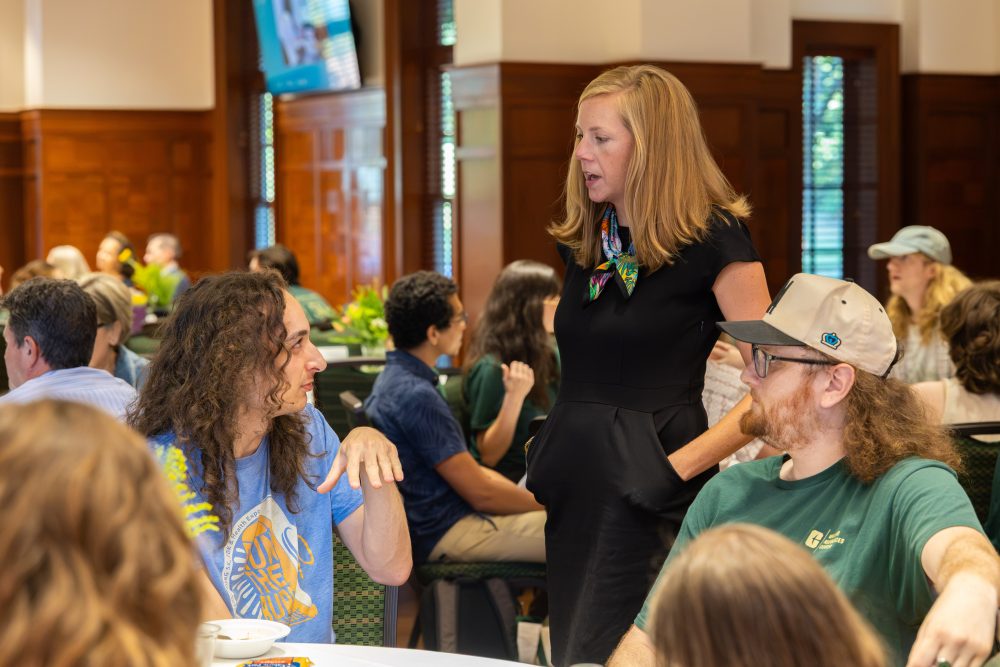
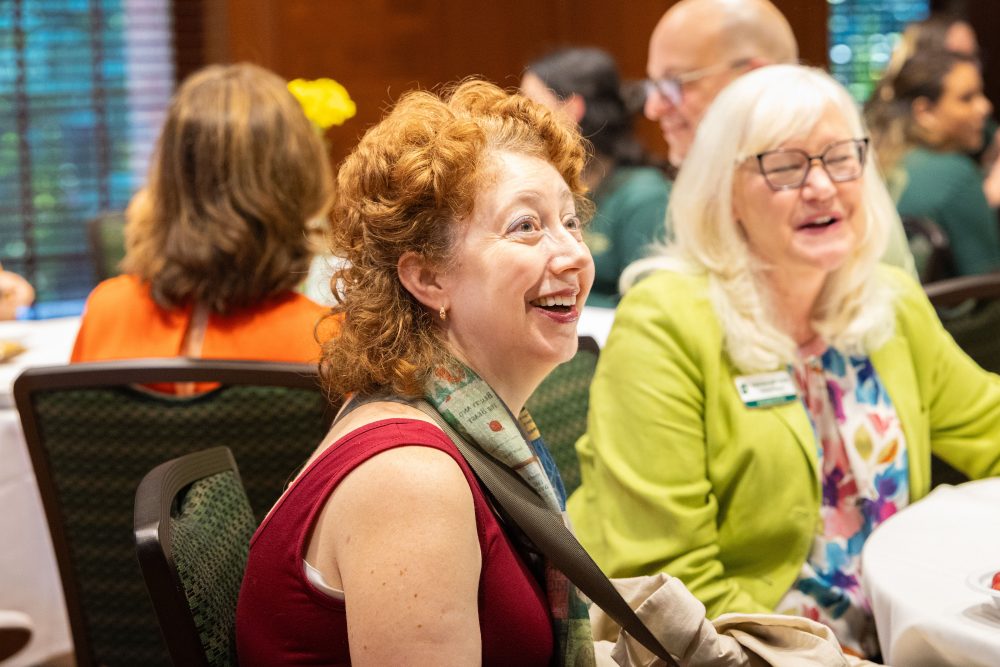
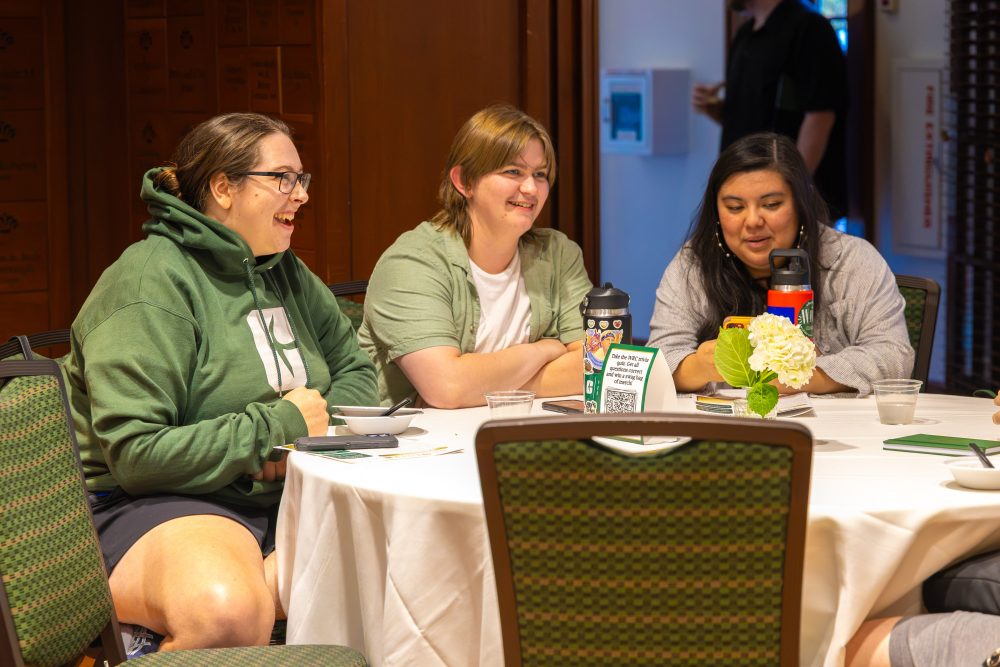
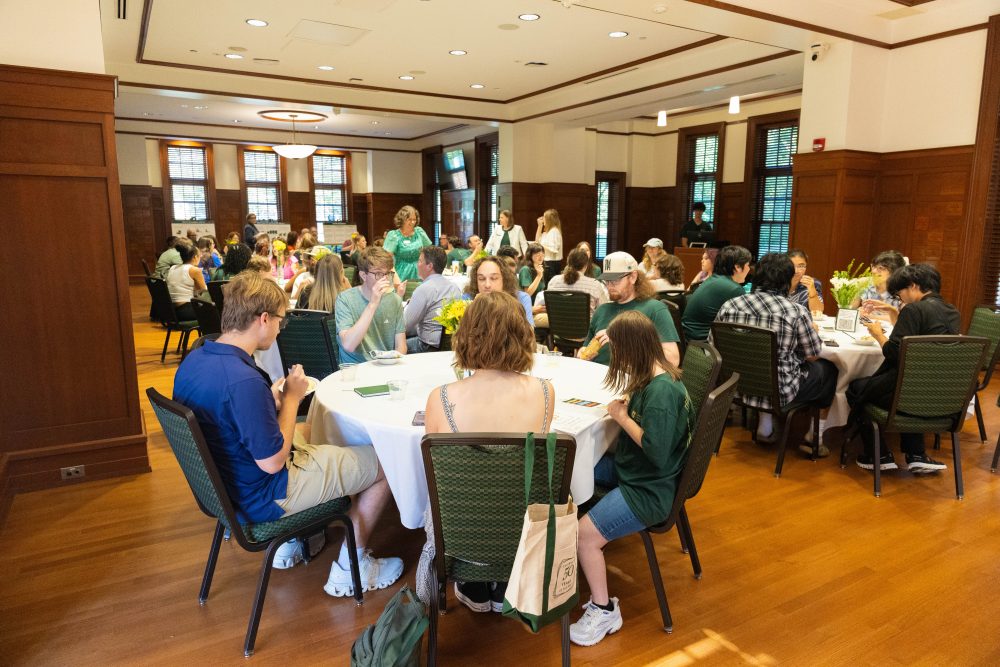
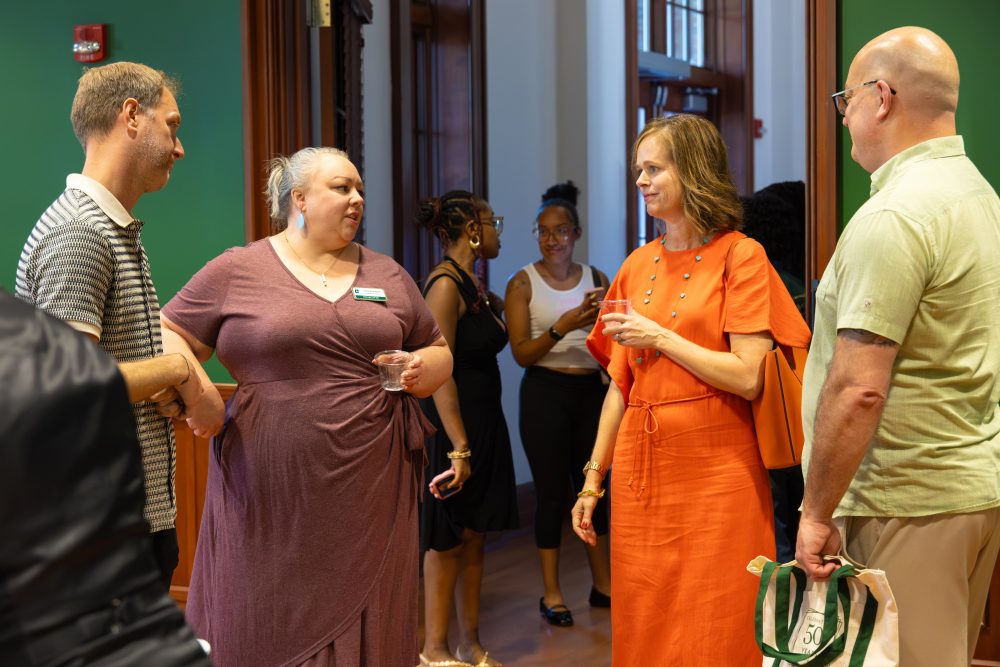
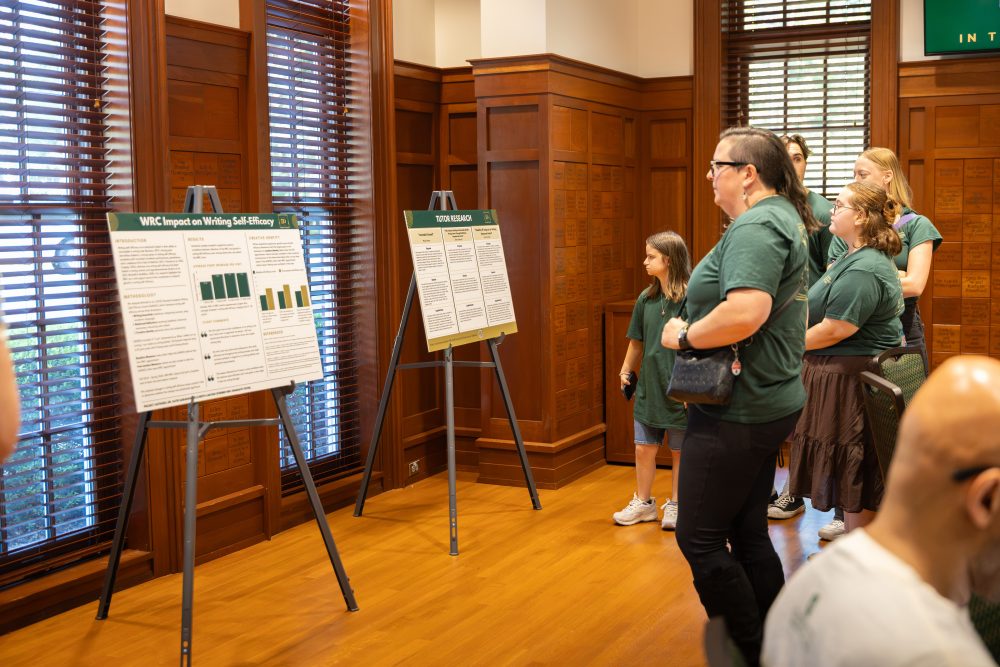
The Writing Resource Center hosted a 50th celebration on Sept. 17 with a gathering at the Harris Alumni Center that brought together more than 100 current and former staff, campus leaders, students and supporters to recognize the Center’s enduring impact on the University community.
Provost Jennifer Troyer and College of Humanities & Earth and Social Sciences Dean Chris Boyer offered a welcome and remarks celebrating the WRC’s legacy and its role in student success.
Katie Garahan, director of the WRC in the Department of English, and Megan Keaton, associate director of the WRC in the Department of Communication Studies, reflected on the Center’s history and continued commitment to helping writers grow.
While the anniversary marked an important milestone, speakers emphasized that the WRC’s mission has remained remarkably consistent since its founding: using every writing project as an opportunity to develop stronger writers.
“The Writing Resource Center is not simply a place where students receive help on a paper,” Garahan said. “Our goal is to support writers as they develop skills and confidence that will serve them throughout their academic, professional and personal lives.”
That mission continues to resonate across campus, even in the age of artificial intelligence. During the 2025-26 academic year, the WRC supported more than 5,000 students through one-to-one tutoring, group consultations and writing workshops. In addition to its main office in Cameron Hall, the Center meets with students in Atkins Library and online through Zoom, making services accessible to writers wherever they are.
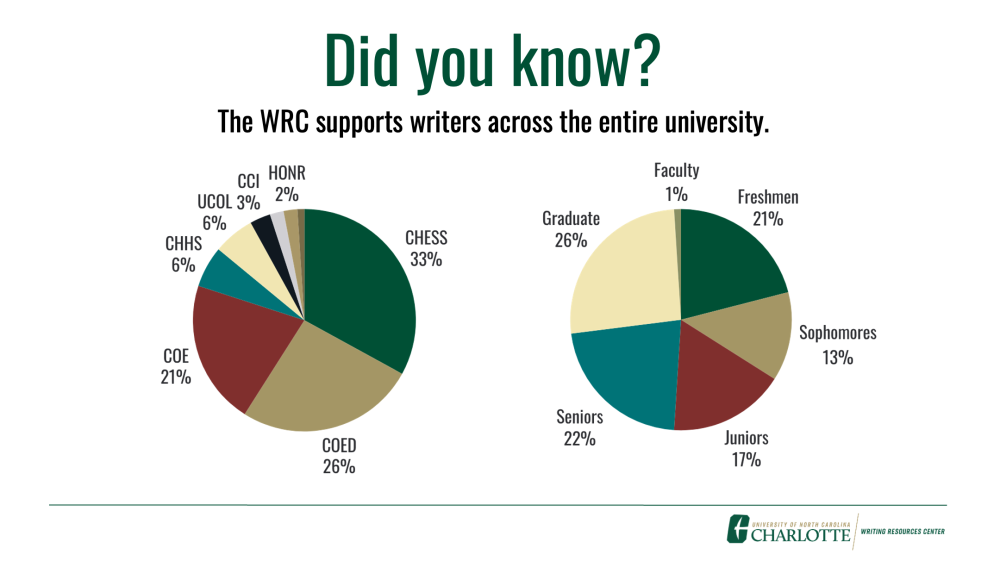
Students seek support for far more than class assignments. WRC consultants regularly assist with job application materials, scholarship essays, personal statements, study abroad applications, graduate and professional school applications and other creative writing projects.
In addition to supporting students, the WRC works with faculty and staff through writing retreats coordinated in partnership with the Urban Institute and UNC Charlotte Botanical Gardens. Since 2024, participants have credited the retreats with helping them make progress on 148 writing projects.
The anniversary offered an opportunity to reflect on how the WRC has evolved over five decades. Senior tutor Chris Harrington, who has spent much of their career with the Center, noted in the WRC’s 50th anniversary edition of the newsletter that the Center began with a small team consisting largely of English and education majors.
Today, the Center recruits tutors from a wide variety of disciplines, with a staff that reflects the wide range of academic interests of UNC Charlotte students. Yet amid decades of change, Harrington said the Center’s core tutoring philosophy remains the same.
“We’re peers. We don’t grade. We don’t give homework,” Harrington said. “We let students set the agenda. We still use any piece of writing to build better writers.”
That commitment to growth rather than correction has helped shape the WRC’s identity for half a century and continues to guide its work today.
As UNC Charlotte celebrates the Writing Resource Center’s 50th anniversary, the Center remains focused on its future: helping writers discover their voices and find confidence in their identity through their writing, one conversation at a time.
Written by Jenn Conway
Photos by Menelik Clark
Graphic courtesy of the Writing Resource Center