CHESS honors legacy and impact of Senator Marshall A. Rauch
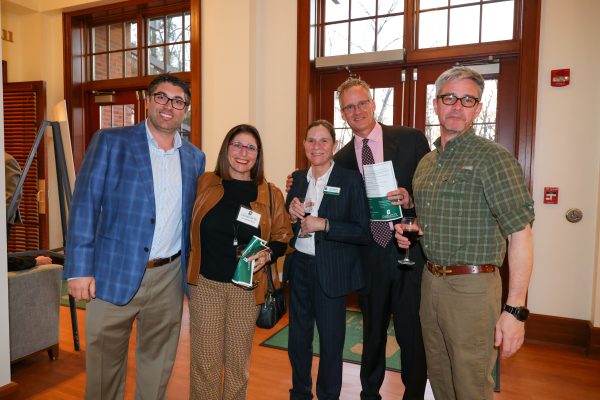
The College of Humanities & Earth and Social Sciences hosted an event at the Harris Alumni Center on Thursday, March 5, to honor the life and legacy of former North Carolina Sen. Marshall A. Rauch, whose commitment to public service and education continues through the Marshall A. Rauch Distinguished Professorship in Political Science.
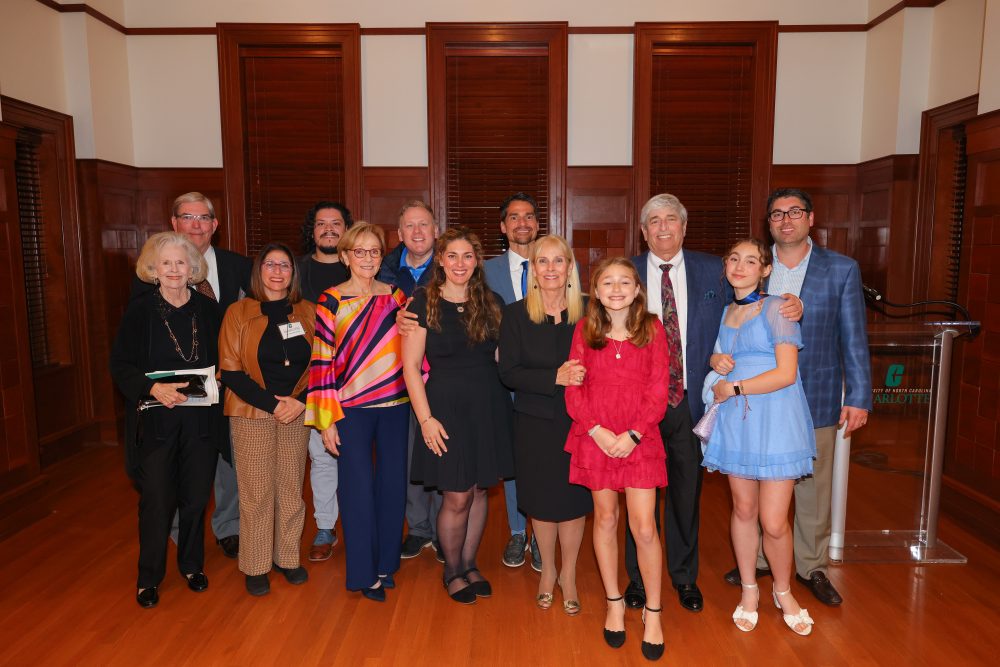
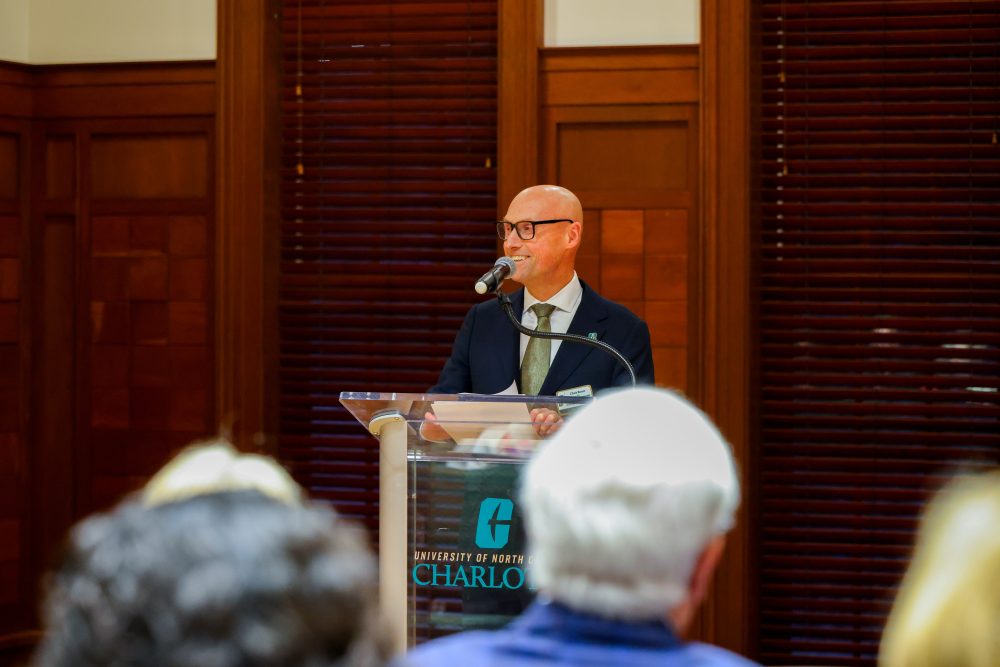
The program, emceed by CHESS Dean Chris Boyer, highlighted Rauch’s decades of civic leadership and his long-standing support for higher education. Attendees included many members of the Rauch family, faculty from the Department of Political Science and Public Administration, current and retired educators and friends of Rauch, and community members from across the region who have been impacted by his philanthropy.
Provost and Vice Chancellor for Academic Affairs Jennifer Troyer spoke of Rauch’s impact at UNC Charlotte, including support establishing the doctoral program in counseling and the Rauch Distinguished Professorship in 1998.
“He held a deep belief that education strengthens democracy and expands opportunity,” said Troyer. “The endowed professorship ensures that the study of government and public policy remains rigorous, relevant and connected to the communities we serve.”
At the time the professorship was established, C.D. Spangler Jr., former UNC System president, wrote to then‑UNC Charlotte Chancellor James Woodward that Rauch’s generosity “will forever honor a man who has distinguished himself not only in business affairs, but also in the political affairs of our state. The University of North Carolina at Charlotte will be a better place in the future because of this distinguished professorship.”
Regina Branton, the current Rauch Distinguished Professor of Political Science and the third person to hold the position, described the professorship as both an honor and a responsibility. She emphasized that Rauch’s values remain central to the work it supports.
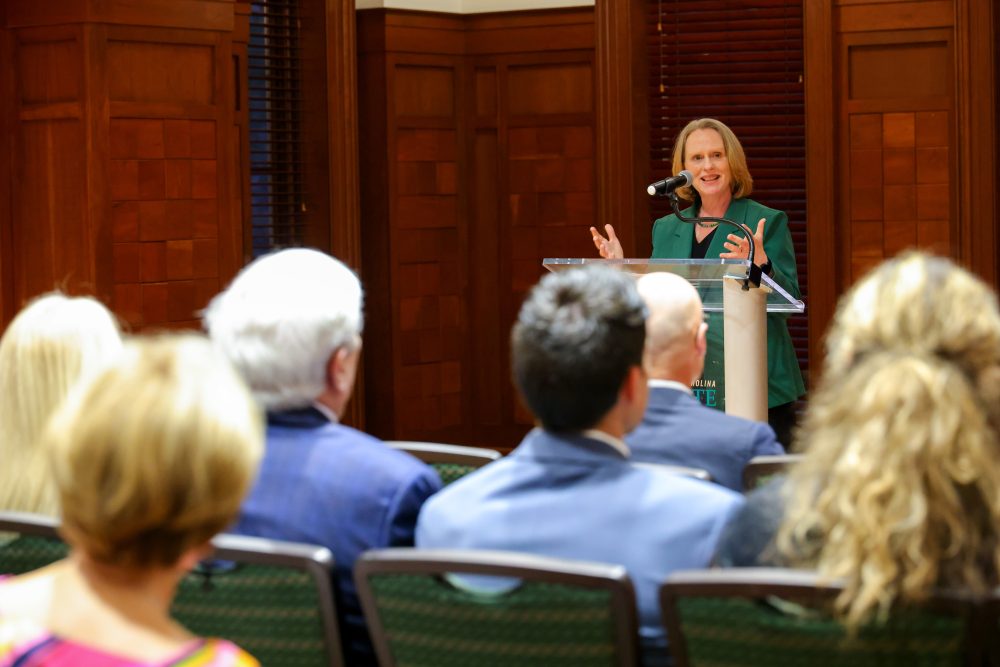
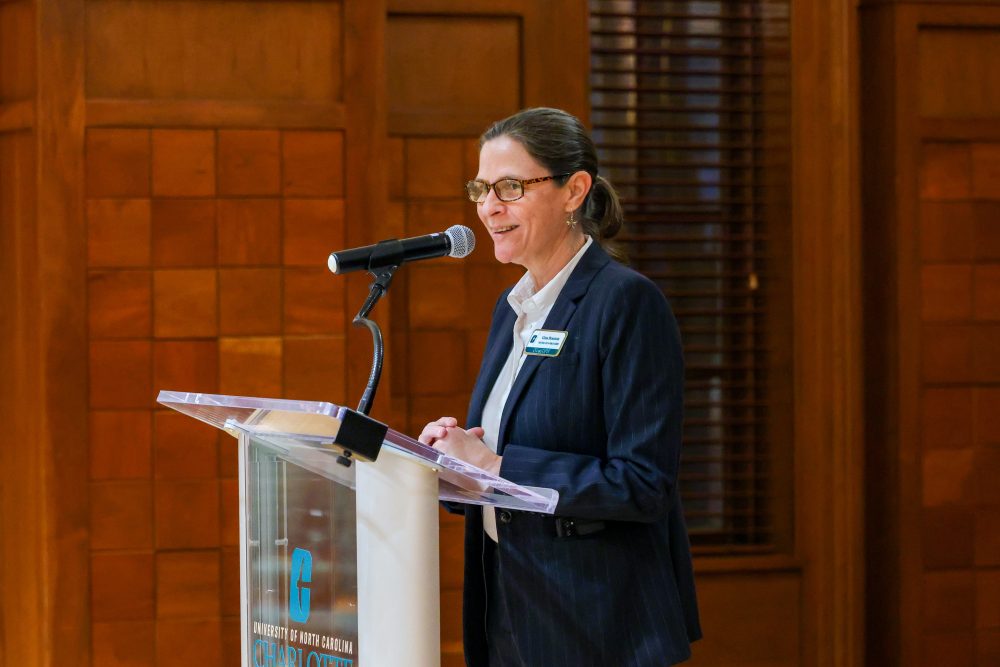
Branton recognized the contributions of the Rauch family, the Gaston Community Foundation, the C.D. Spangler Foundation and the UNC System, noting that their support reflects “a shared commitment to expanding educational opportunity, institutional strength, and long-term impact.”
“Senator Marshall A. Rauch believed deeply in public service and in the role education plays in preparing future leaders,” Branton said. “His professorship at UNC Charlotte continues that legacy by supporting students, faculty, and the broader UNC Charlotte community.”
She detailed how the professorship strengthens research, student engagement and departmental initiatives. The position has supported student and faculty travel, scholarly programming and access to major research data. Branton highlighted recent examples, including funding for two graduate students to present their work at the American Political Science Association’s annual meeting in Philadelphia.
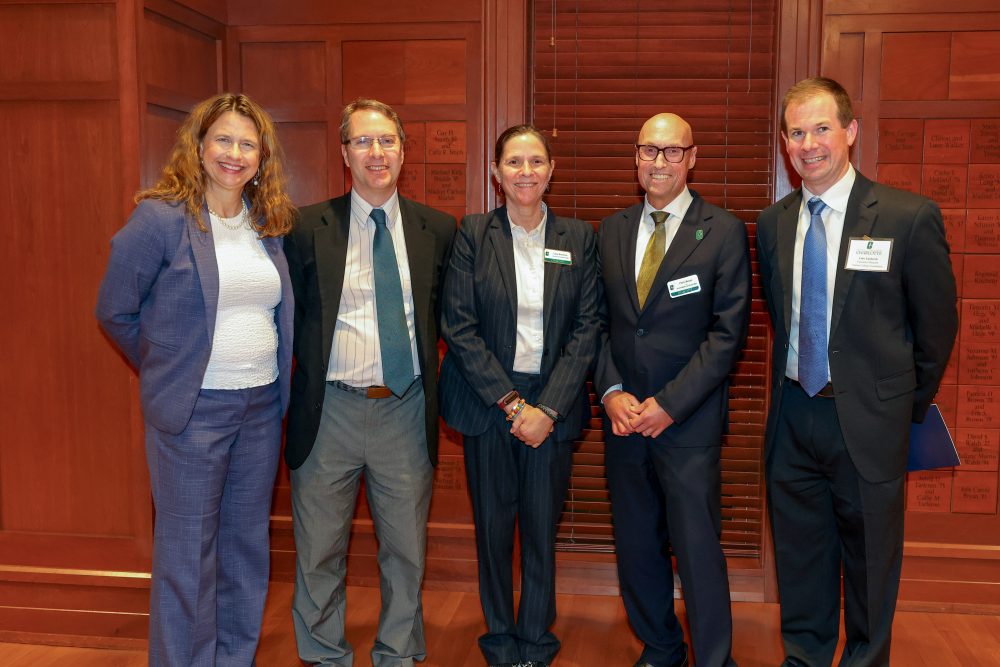
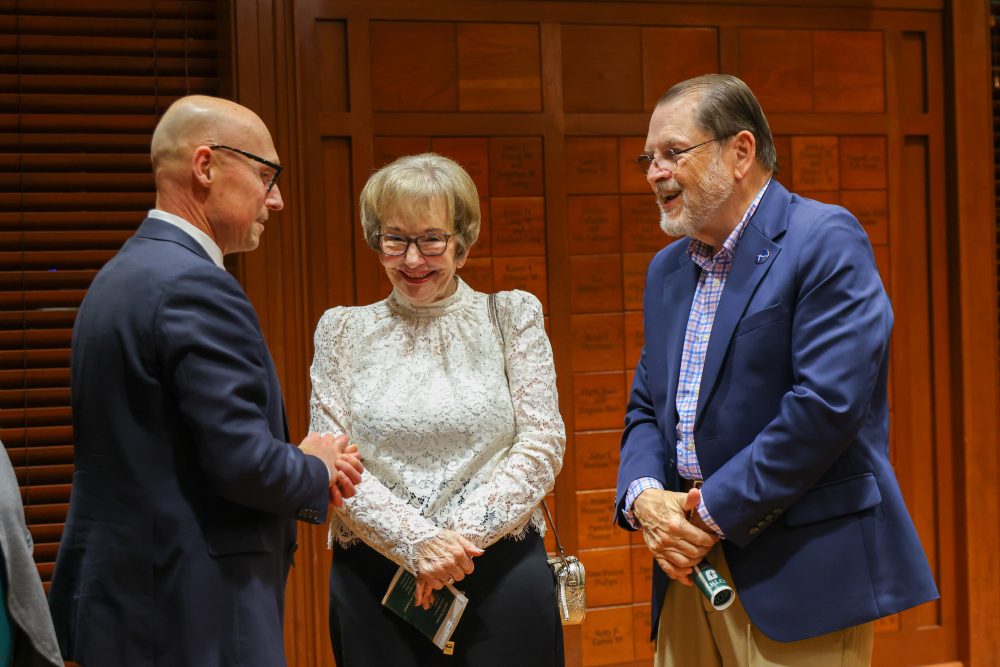
Branton also noted that the professorship has supported campus workshops, including a National Science Foundation funding seminar, and has strengthened the Public Opinion, Learning and Sentiment (POLS) Lab, which provides hands-on research training for students.
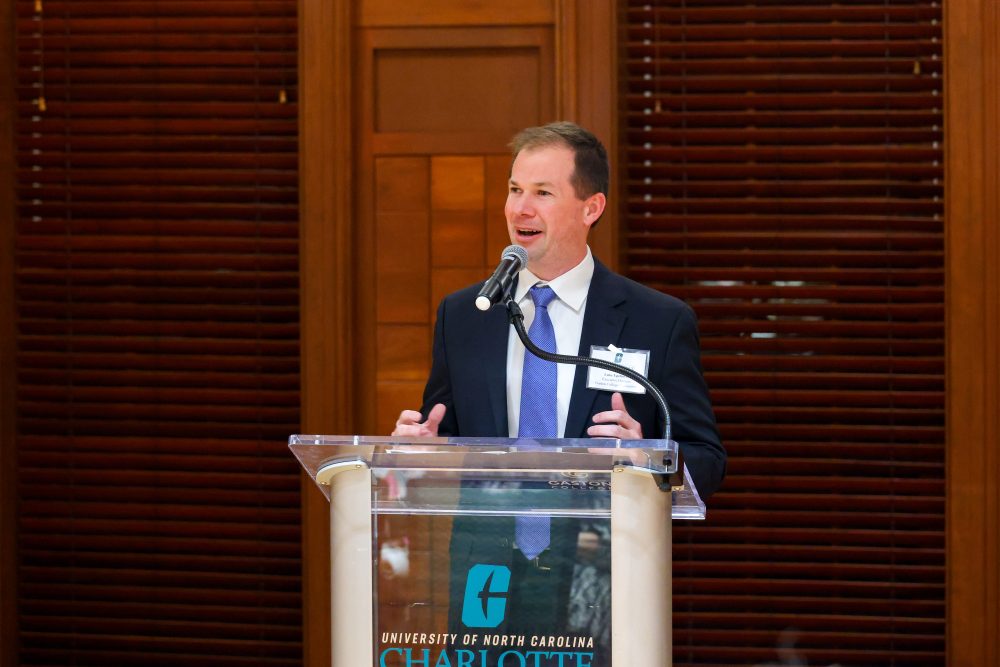
Other speakers reflected on Rauch’s influence across the region. Luke Upchurch, executive director of the Gaston College Foundation, described Rauch’s long-standing support for Gaston College, his role in expanding educational access and his passion for improving the lives of others. He described Rauch’s legacy as one of “complimentary contrasts,” including the support of the Rauch Science and Fine Arts Building on their campus, which will be hosting another UNC Charlotte partnership with Gaston College in the form of STEM scholarships.
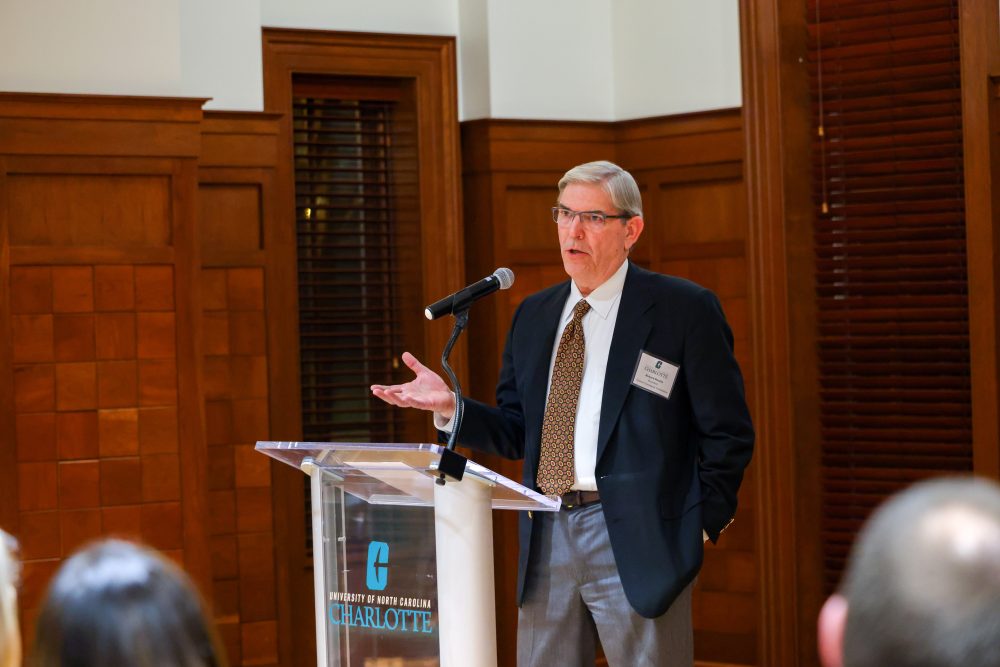
Richard Rankin, president of the Gaston Community Foundation, spoke about Rauch’s philanthropic leadership and his commitment to strengthening community organizations. “Part of Marshall’s genius was that he knew how to bring people together for a common cause and for a common good,” said Rankin.
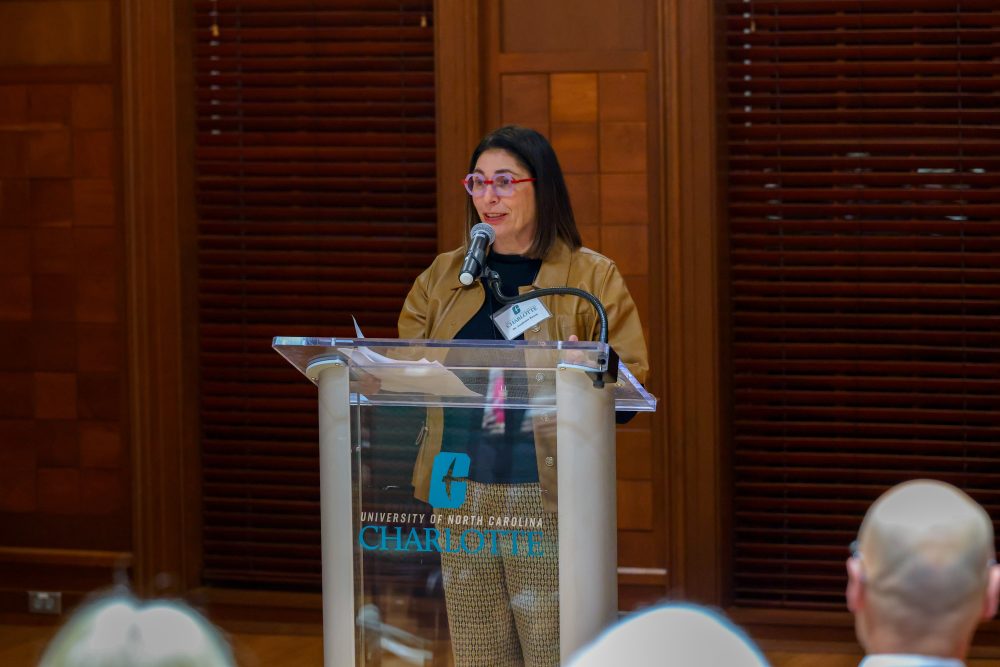
Speaking on behalf of the Rauch family, Stephanie Rauch shared many personal reflections on her father’s humor, generosity, his dedication to public service and civil rights, and his belief in the power of education to shape communities. She shared how her father was always thinking about new possibilities, including raising carrier pigeons and starting a new business with another family member at the age of 91.
Rauch served in the North Carolina Senate from 1967 to 1990 and was an advocate for economic development, mental health services and regional collaboration. His legacy endures through the professorship that bears his name and the many institutions shaped by his leadership.