Pilar Blitvich named Chancellor’s Professor, honoring internationally renowned linguistics research
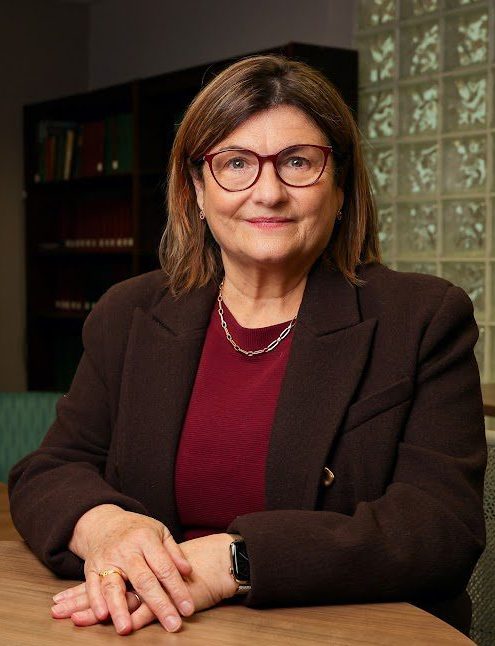
UNC Charlotte has awarded Pilar Garcés-Conejos Blitvich, Ph.D., a globally recognized scholar of pragmatics, conflict and digital discourse, the esteemed title of Chancellor’s Professor.
The Chancellor’s Professor designation recognizes outstanding contributions by a full professor who is not only a scholar of international and national distinction but also has a demonstrated record of significant achievement within the University community.
The University bestows the academic rank, which transcends disciplinary lines, to allow each Chancellor’s Professor the greatest latitude in teaching, scholarship and community engagement. Chancellor’s Professors hold the title for life.
All three of the current Chancellor’s Professors are faculty members in the College of Humanities & Earth and Social Sciences. Roslyn Arlin Mickelson, Ph.D., in the Department of Sociology received the honor in 2014 and Steven Rogelberg, Ph.D., professor of organizational science, psychology and management received the honor in 2013.
For Blitvich, the recognition is both unexpected and deeply meaningful.
“Becoming a Chancellor’s Professor is an immense honor, and I’m extremely grateful to Kirk Melnikoff, chair of the Department of English, Chris Boyer, founding dean of the College of Humanities & Earth and Social Sciences, the Office of the Provost, Chancellor Gaber, the Board of Trustees and everyone across the world who has helped me get here,” said Blitvich. “It’s a tremendous honor that comes with a lot of responsibility.”
Renowned linguistics research
Blitvich’s research has consistently anticipated the cultural and technological shifts that define contemporary communication. Early in her career, she recognized that conflict was central to understanding human interaction.
“Until relatively recently, many influential models of communication in linguistics were developed with cooperative or harmonious interaction more centrally in view. Conflict was certainly not absent from the field, but it was often less central than issues such as cooperation, politeness, mediation or resolution,” Blitvich explained. “Yet conflict is an integral part of human interaction: It can be highly functional and, in many cases, even productive. It can range from something mild, like a disagreement, to something extreme, like hate speech. There is a huge range of conflict types.”
When social media took off, she was already positioned to study how conflict moved into online spaces. This shift reshaped how people engage with others, often in polarized ways, as algorithms and business models became biased toward conflict in order to drive engagement.
“Before that, conflict was more backstage. It surfaced publicly, for instance, in politics, but much less often among ordinary people,” she said. “Now, people are confronted with conflict every time they go online.”
In addition to her applied work, Blitvich has established herself as a theorist who develops new theoretical models and pushes the field forward.
“Rather than just applying models developed for face-to-face, dyadic interaction, I have tried to theorize how the affordances of digital communication reshape the way we communicate with each other,” she said.
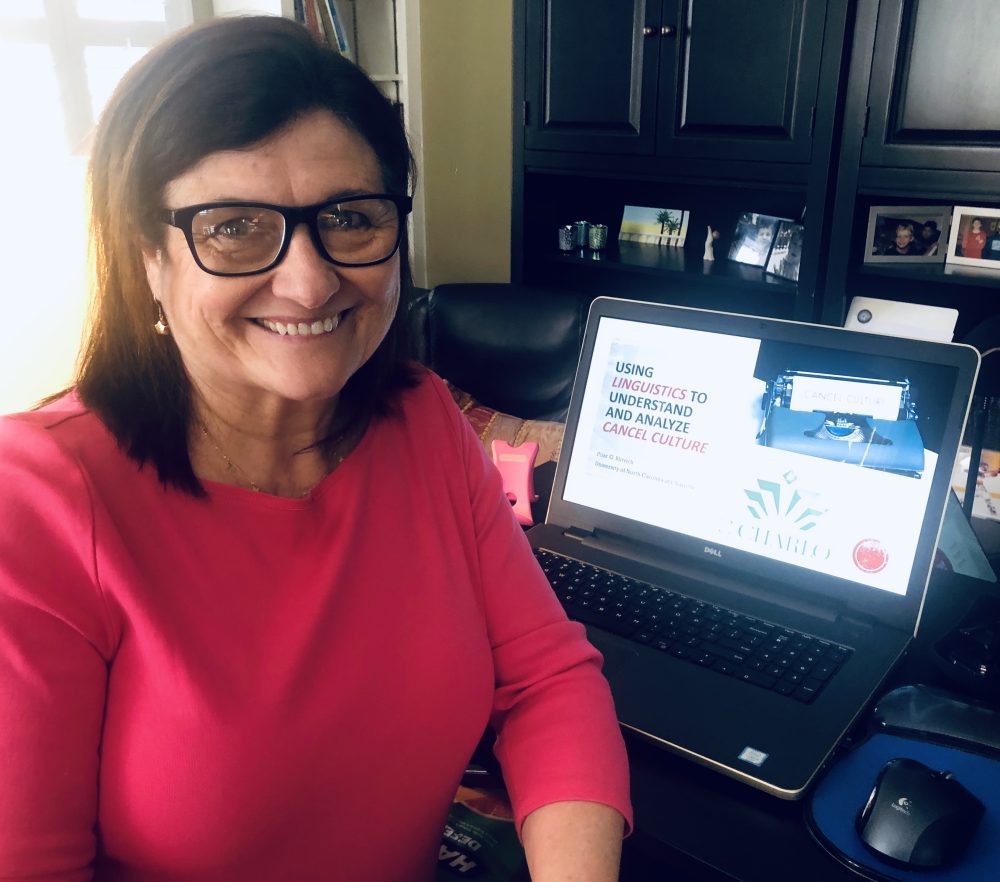
In the past five years, Blitvich has produced pioneering research on cancel culture, online public shaming and moral panics. In 2023 and 2025, she ranked among the top 2% most cited scholars in the world according to statistics compiled by Stanford University professor John P.A. Ioannidis and available through the Elsevier Data Repository.

Uniting the field
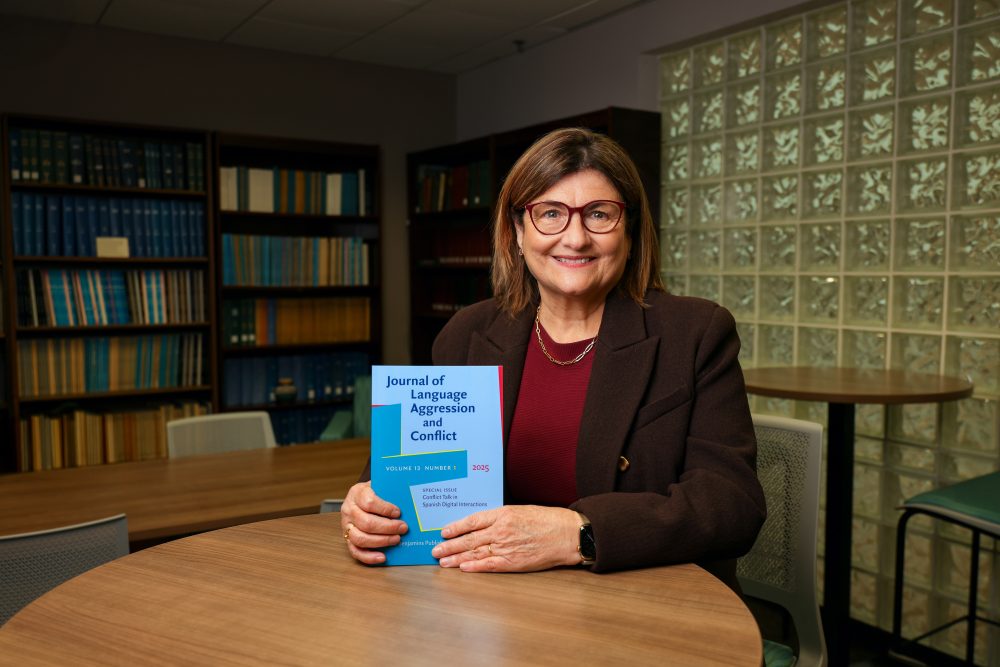
Blitvich is the co-founder and co-editor in chief of the Journal of Language Aggression and Conflict, which has helped build a scholarly community around the study of conflict in communication.
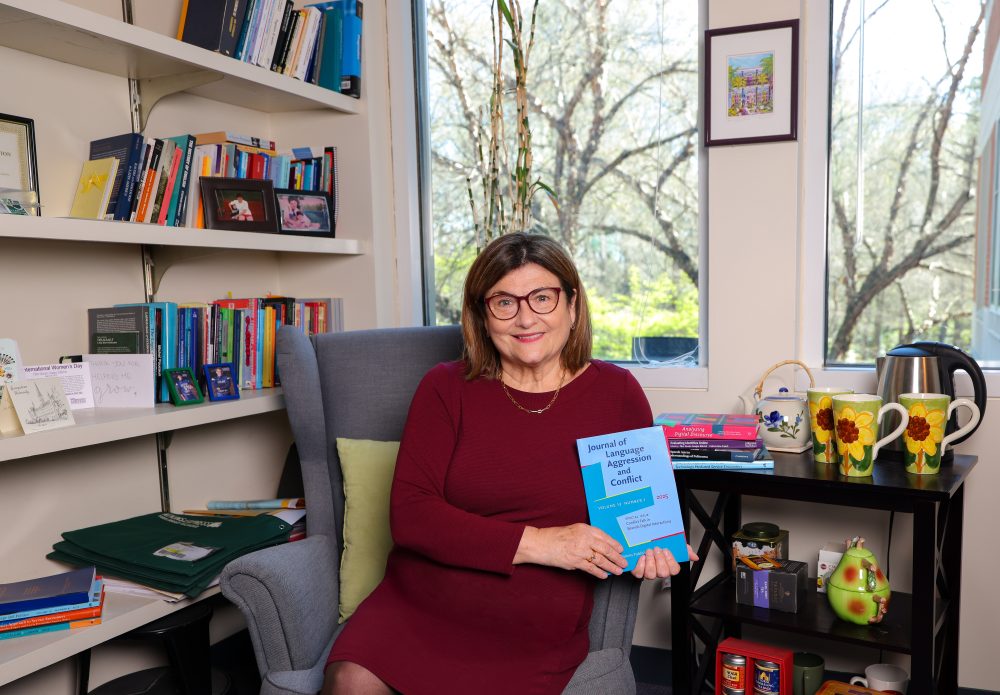
Co-edited by Maria Sifianou, Ph.D., professor emerita of sociolinguistics at the National and Kapodistrian University of Athens, and published by John Benjamins since 2012, the journal is in the top quartile of more than a thousand journals in linguistics.
Sifianou and Blitvich also co-edit the Routledge Focus on (Im)politeness book series, which spotlights concise volumes of cutting-edge research on (im)politeness by both up-and-coming and established scholars, with an emphasis on developing and fostering interdisciplinary synergies.
In addition, Blitvich serves on the editorial board of eight journals, including Journal of Pragmatics, Journal of Politeness Research, Internet Pragmatics and Intercultural Pragmatics, and five book series, among them, Cambridge Elements in Pragmatics and Pragmatics and Beyond.
Happiness through teaching
Blitvich’s commitment to thought-leading research extends to the classroom, which she sees as a natural continuation of the intellectual life she has built over decades of scholarship.
“It’s been a lifelong intellectual journey. When I look back over the past 30 years, I think about all those readings and all the quiet moments of reflection as I go about my daily life, when ideas come to me,” said Blitvich. “It’s a life of the mind, and it really suits me, so I’m especially happy to be able to bring that research into the classroom.”
Her courses evolve constantly to keep pace with a rapidly changing field. She encourages students to conduct hands-on research, assigning projects that allow them to collect data, explore emerging topics and publish their work.
“I’m a happy teacher, and I’ve never, ever considered doing anything else. I go to class and I’m happy,” she said. “When I finished my undergraduate degree, people asked what I wanted to do, and I said I just wanted to keep learning, and I’ve found a job that pays me to do that.”
Mentorship
Blitvich credits several mentors for shaping her career. She remembers Norman Blake, professor of English language at the University of Sheffield, and one of the top scholars of medieval English linguistics. Blake spent hours helping her develop a new methodology for her dissertation.
“His generosity and brilliance left a lasting imprint on me that I still carry with me today,” she said. “He was a top notch academic and an influential person, but he was also, as a human being, very generous and down to earth.”
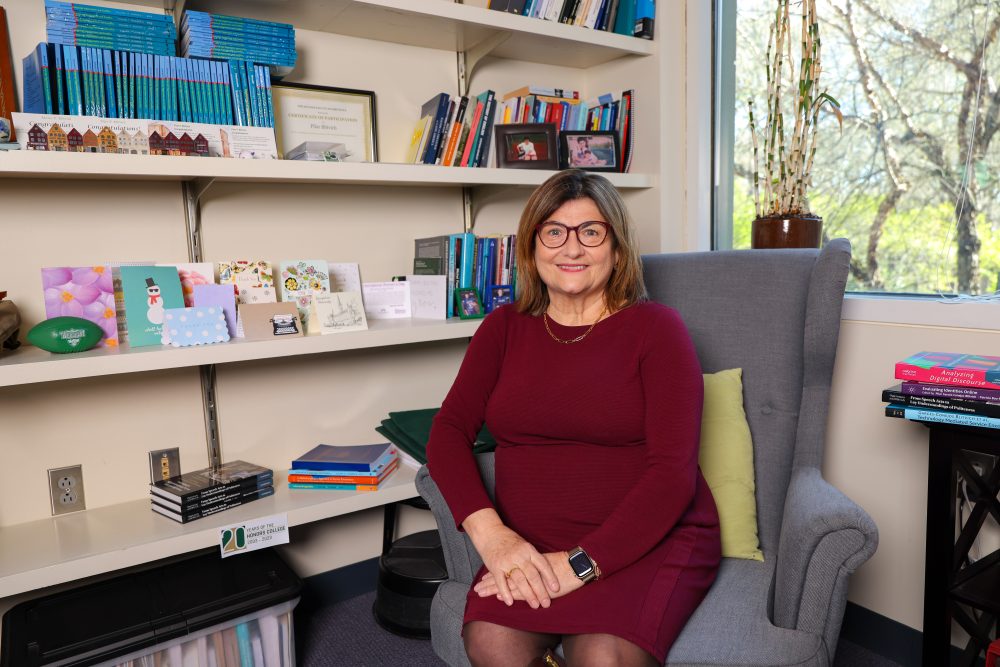
At UNC Charlotte, the influence of Professor Emerita Boyd H. Davis, whose office she now inhabits, was especially meaningful.
“When I was hired here, Professor Davis was a shining light. She’s someone who is extremely hardworking,” said Blitvich. “I had a choice of office, and I wanted to be in here to see if some of her brilliance would rub off on me. She’s an inspiration on many levels.”
In her own mentorship, Blitvich tries to be available, supportive and relatable. She helps students find research paths, co-present at conferences and publish. In 2022, her journal published a special edition for students, including work by two of her graduate students Julia Signorelli and Caitlin Cosper Ritchie.
She has also published with former student Abby Mueller Dobs, Ph.D., in the Journal of Pragmatics. Dobs obtained an M.A. in applied linguistics from UNC Charlotte and now works alongside Blitvich as the editorial assistant of the Journal of Language Aggression and Conflict.
“I’ve grown as a teacher over the years, but that process has also kept me aware of how much there is always left to learn,” Blitvich explained. “I think that has helped me approach teaching with humility and has shaped the way I work with and mentor students.”
International Collaboration
Blitvich’s career has been shaped by international collaboration, from guiding Ph.D. students in Seville to serving on committees around the world. She began her own academic journey in Spain, earning degrees from the University of Valencia.
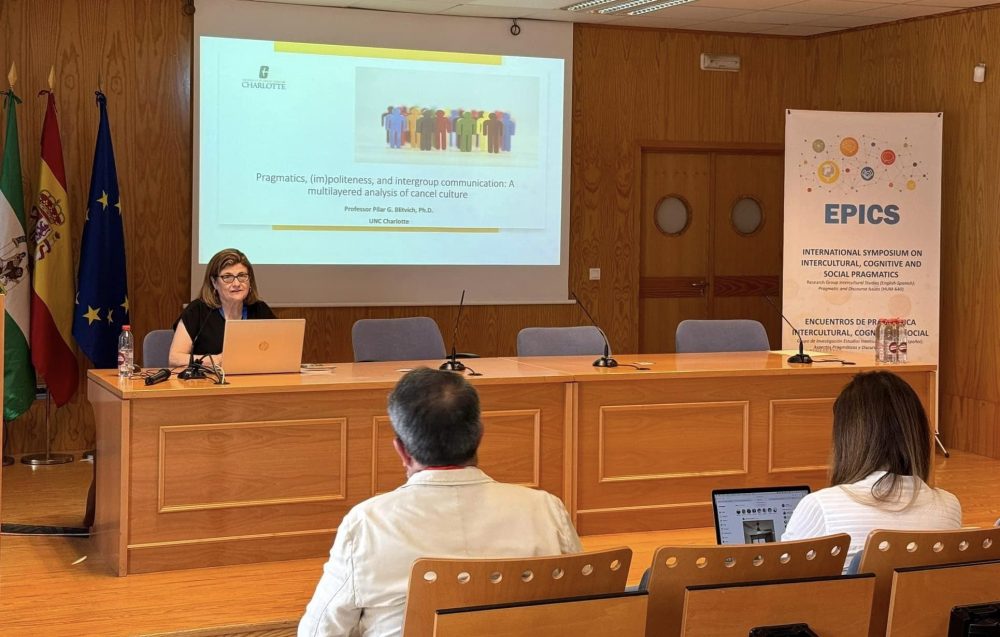
Before joining UNC Charlotte in 2005, Blitvich taught at the University of Seville for a decade. Throughout her career, she has continued to work closely with longtime collaborators in Spain, maintaining a research network that spans continents.
“In graduate school we forged these commitments to each other and to our work that have lasted to this day, and they are a big inspiration,” Blitvich said.
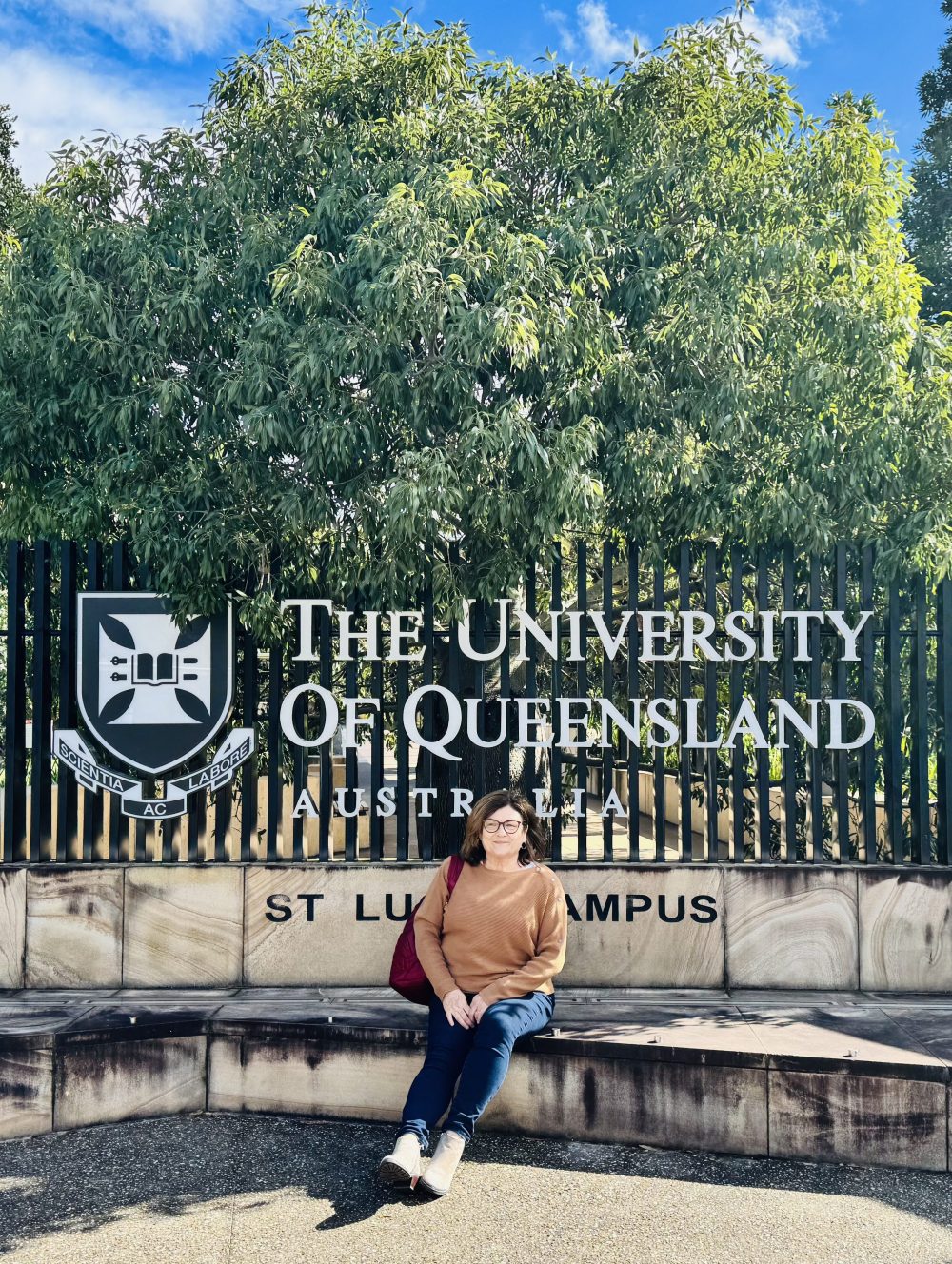
She co-founded the Approaches to Digital Discourse Analysis (ADDA) conference with one of these longtime collaborators, Patricia Bou Franch, Ph.D., professor of linguistics at the University of Valencia.
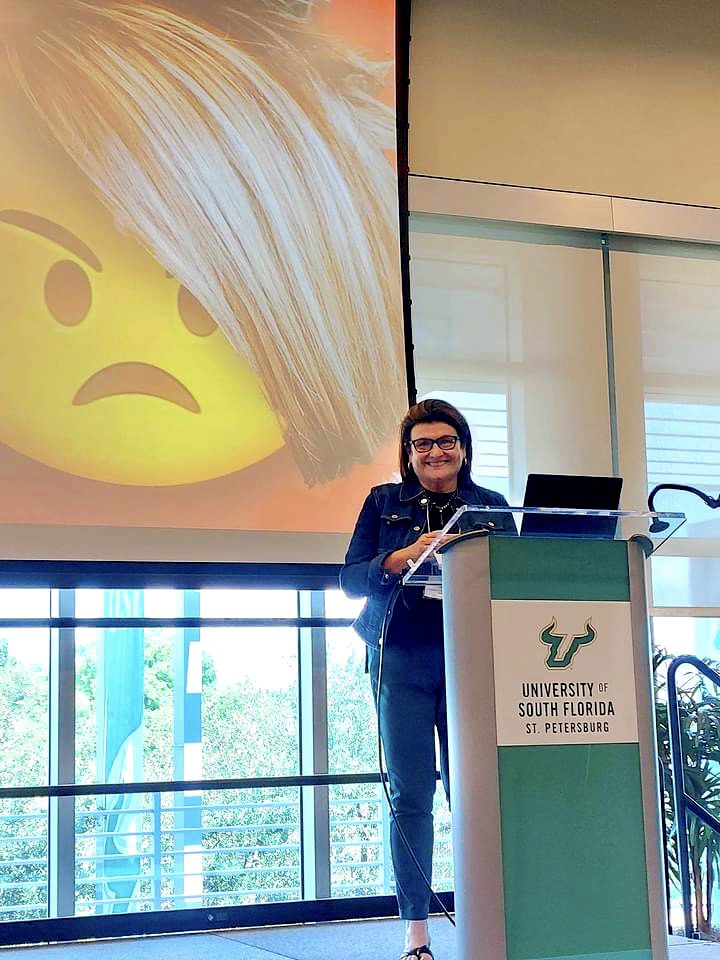
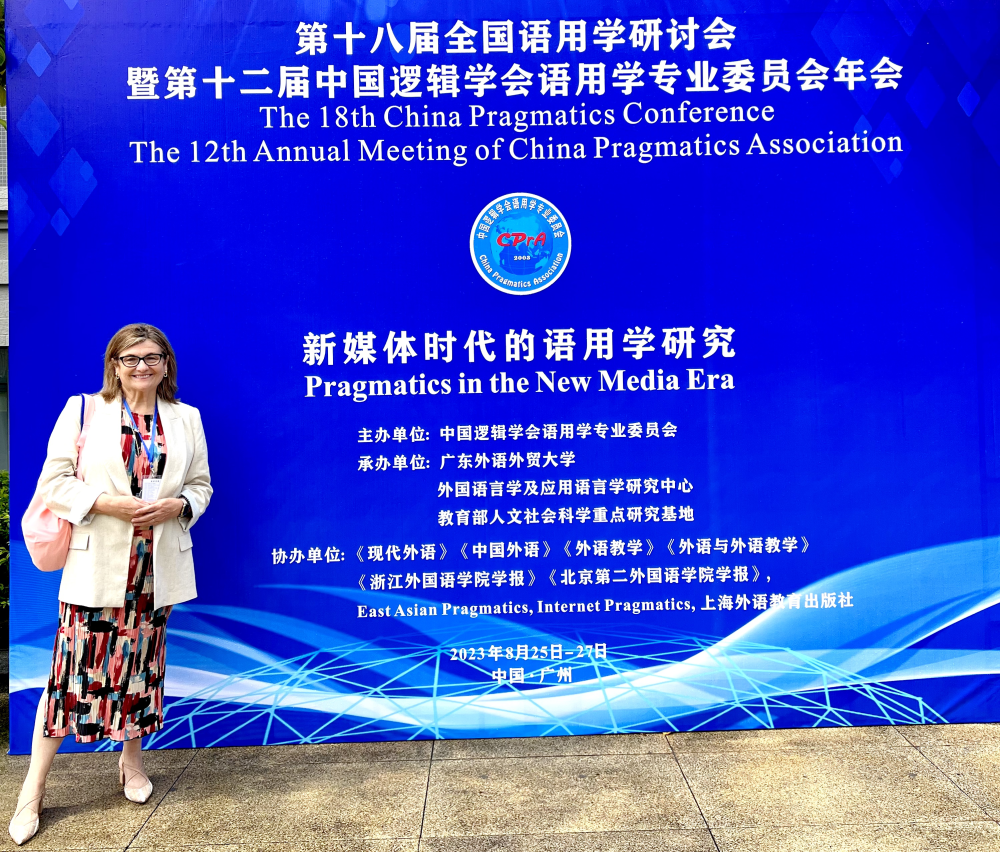
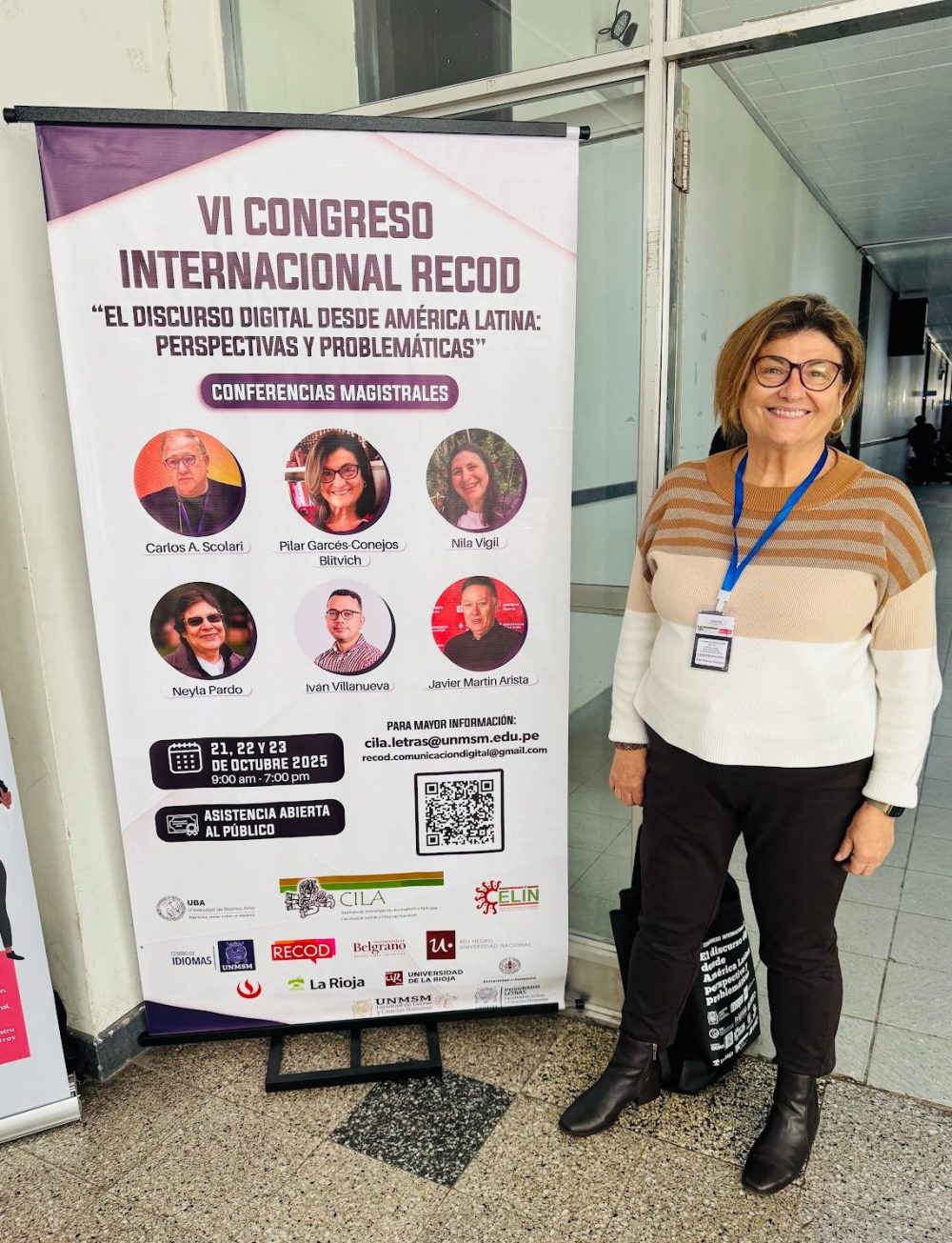
Blitvich is also the founder of the EPICS conference in Seville as well as the co-founder of the American Pragmatics Association, where she serves as president, and its conference. She has delivered plenaries around the world and serves on the consultation board for the International Pragmatics Association Conference.
Upcoming work
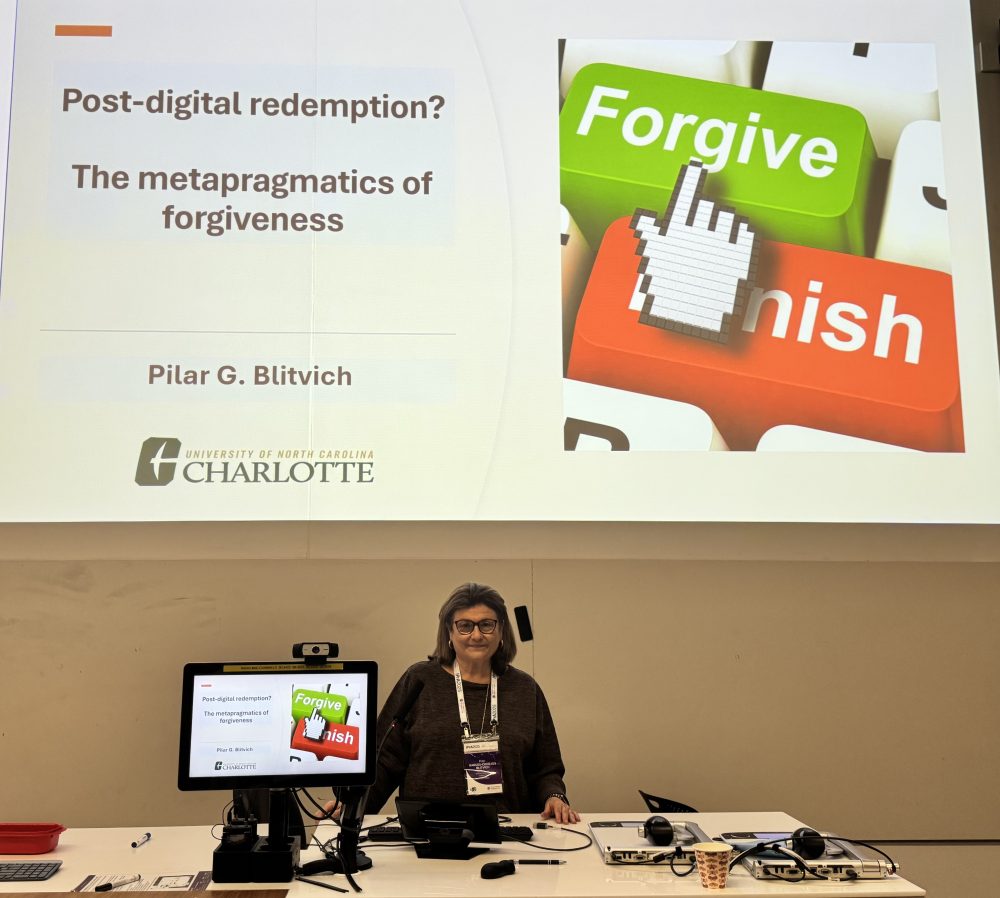
During a sabbatical over the past year, Blitvich has been working on two major projects: A handbook on language, aggression and conflict to complement her journal, and a new book exploring forgiveness in the digital age.
The book, under contract with Cambridge University Press, examines how people move past being canceled online.
“My new book examines how digital architecture affects whether forgiveness is possible, whether people can move on when screenshots and reposts make forgetting impossible,” she said. “It’s intellectually demanding and interdisciplinary, drawing on psychology and philosophy as well as linguistics.”
She also has a busy schedule of international conferences and talks this summer. In May, she will travel to the University of Basel to present a plenary talk at Forum Basiliense, an interdisciplinary research forum bringing together academics and the community. This year’s theme is “Cooperation & Conflict” and Blitvich will present “Postdigital moral wars and reconciliation: Cancel culture, degradation and moral repair in platformed publics.”
Honoring a life of intellect
Blitvich has dedicated her career to producing cutting‑edge research and anticipating emerging trends in digital communication, driven by a relentless curiosity and a deep ability to dissect and understand conflict.
“Our work is a little bit like the loneliness of a long distance runner,” Blitvich said. “So it means a great deal to receive this recognition from my institution and to know that it values the body of work I have developed and sees my research as meaningful.”
For Blitvich, earning the title of Chancellor’s Professor is not only a recognition of her years of dedication to her students, the University and her research, but also a reminder of the responsibility she carries forward and her continued pursuit of professional excellence.
“The recognition means a great deal to me, and I feel both happy and deeply grateful,” she said. “Over the years, I’ve always tried to contribute to the University in whatever ways I could whenever I was asked. I feel this honor also gives me an opportunity to represent the institution even more fully, and I will do my very best to do so well.”
Written by Emily Hamm
Portraits by Kat Lawrence
Conference photos courtesy of Pilar Blitvich