Sara Gagné provides expertise on Charlotte’s chimney swifts

As chimney swift populations decline, conservationists in Charlotte are working to protect the older brick chimneys that have become important habitats for the birds.
Sara Gagné, Ph.D., associate professor and chair of UNC Charlotte’s Department of Earth, Environmental and Geographical Sciences, is among researchers helping to document local chimney swift roosting sites and raise awareness of the species’ conservation challenges. She recently featured in local news coverage by WFAE, WBTV and The Charlotte Ledger.
A declining bird species
Chimney swift populations have fallen by more than half since the mid-20th century as the birds face the combined pressures of habitat and food loss. Once reliant on hollow trees in old-growth forests for roosting, swifts adapted to using brick chimneys as development transformed the landscape. Today, those structures are becoming less common as older buildings are demolished and modern construction moves away from traditional masonry chimneys.
The birds also depend on flying insects for food, making widespread insect declines another concern.
“We know that we’re in the middle of an insect apocalypse,” Gagné told WFAE. “We’ve lost a lot of insect biomass over the last several decades.”
Tracking Charlotte’s remaining roosts
Gagné is documenting chimney swift roosting sites in Charlotte as part of a larger research effort. According to her research, Charlotte has only 15 known active chimney swift roosts, six of which are located on Charlotte-Mecklenburg Schools properties.
Conservation efforts have drawn attention to Charlotte’s former Smith Middle School property on Tyvola Road, where more than 1,000 chimney swifts use a large brick chimney as a communal roost while preparing for their annual migration to South America. The vacant school is expected to be demolished following safety concerns from families at neighboring Collinswood Language Academy, but conservationists and local families support preserving the chimney if it can safely remain standing.
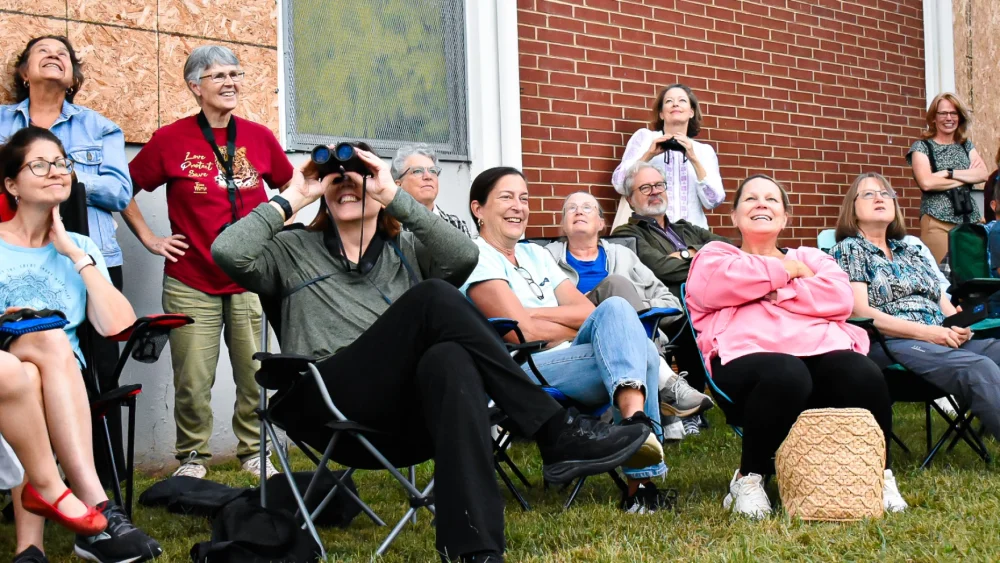
Mecklenburg County officials have said they intend to preserve the chimney during demolition if it is structurally feasible, potentially maintaining an important piece of urban habitat for a species adapting to a changing landscape.
Learn more from WFAE, WBTV and The Charlotte Ledger.
Compiled by Emily Hamm