Psychology master’s student earns prestigious AAUW International Fellowship
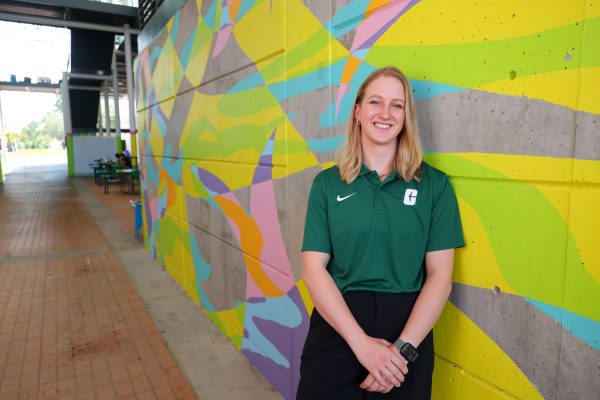
As a competitive rower growing up in Poland, Martyna Wasilewska learned discipline, resilience and the value of pushing beyond her comfort zone. Those qualities have carried her across continents, into graduate school at UNC Charlotte and now to national recognition as a recipient of a highly competitive American Association of University Women International Fellowship.
The fellowship will provide $20,000 toward Wasilewska’s graduate degree in psychology and recognizes women from around the world who demonstrate academic excellence, leadership potential and a commitment to improving the lives of women and girls.
For Wasilewska, a master’s student in the Cognition in Interaction Lab led by Alexia Galati, Ph.D., associate professor of psychological science and director of the Cognitive Science program, the award provides more than financial support.
“It gives me room to breathe,” said Wasilewska. “As an international student, funding is always something you’re thinking about. This fellowship allows me to focus more fully on my research and my goals for the future.”
Wasilewska arrived in the United States from Poland on an athletic scholarship to study and compete as a rower at the University of Central Florida. While completing her undergraduate degree in psychology, she discovered a passion for research and began looking for opportunities to continue her education.
“Martyna came to us with research experience that aligned remarkably well with the work we were doing,” said Galati. “What stood out even more was her initiative. She’s someone who consistently seeks opportunities to learn, contribute and grow.”
That search eventually led her to the College of Humanities & Earth and Social Sciences at UNC Charlotte and Galati’s lab, where research explores how people communicate, coordinate and align with one another through language, gestures, eye gaze and other behaviors.
A lab focused on human connection
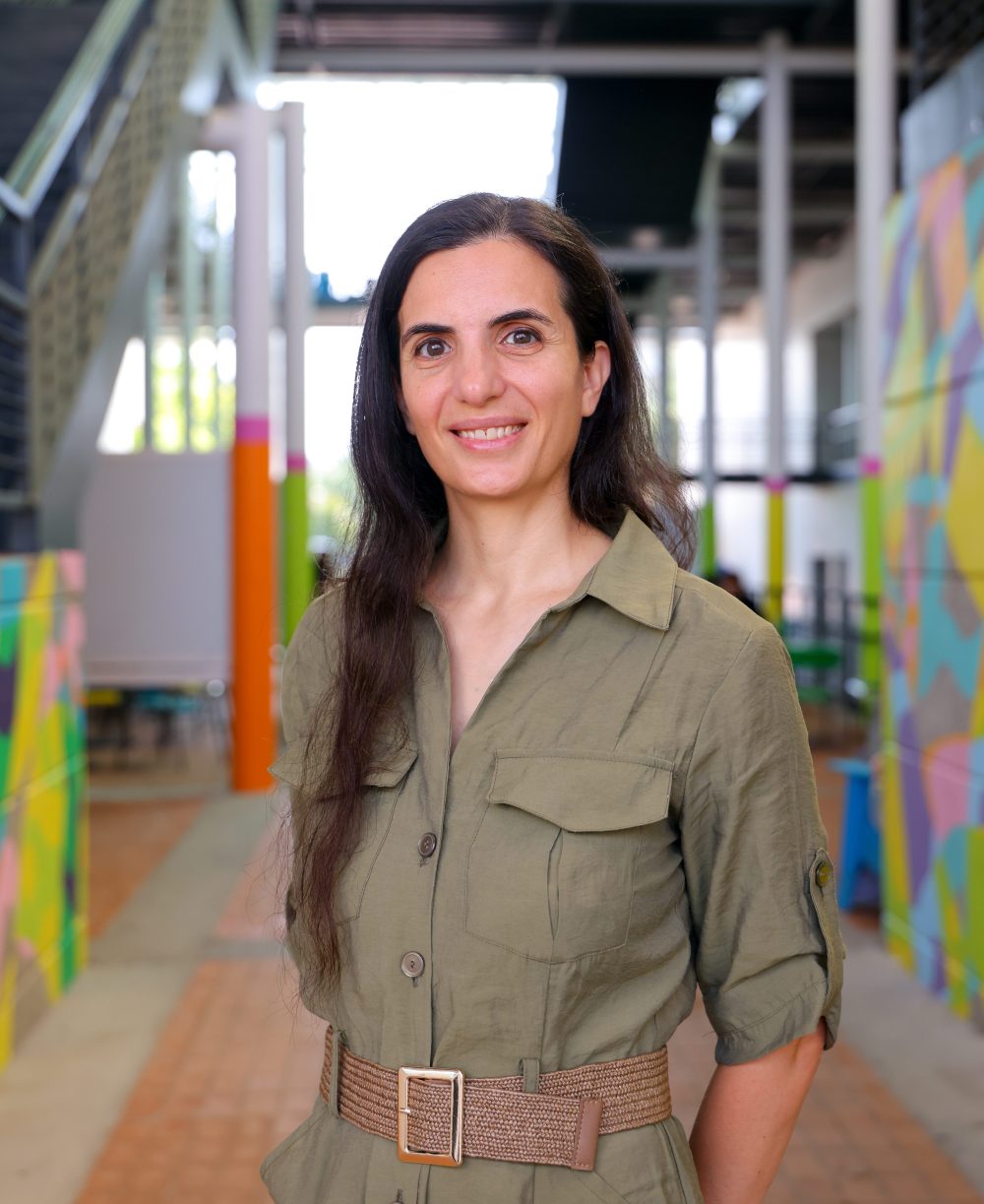
Galati, who joined UNC Charlotte in 2018, studies language as a fundamentally social activity. Her research examines how people adapt communication for different audiences and how cognition is situated in interaction with others and the environments they inhabit.
Unlike traditional laboratory studies that focus on individuals completing tasks in isolation, the Cognition in Interaction Lab in the Department of Psychological Science investigates communication in dynamic social settings. With support from the National Science Foundation, the lab examines how people coordinate their behavior and communication when working toward shared goals.
“We’re interested in what happens when people work together,” Galati said. “We study how speech, gestures, eye movements and other forms of behavior unfold over time and become coordinated across individuals.”
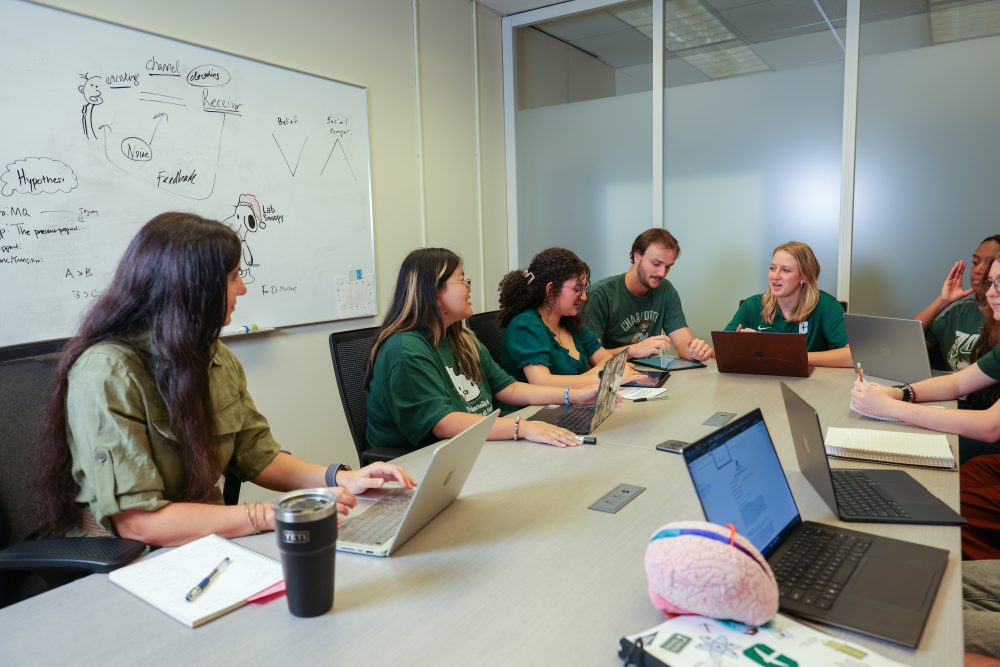
The lab currently includes graduate students, undergraduate researchers and collaborators from across the university. Galati said the lab environment encourages students to pursue interdisciplinary questions and connect cognitive science research to real-world challenges.
For Wasilewska, that approach inspired a master’s thesis that combines her longtime interest in athletics with questions about communication and psychology.
Her research examines alignment in coach-athlete communication about nutrition, performance and body-related topics, and whether coaches’ spoken conversations and intentions align with how athletes perceive and interpret those messages.
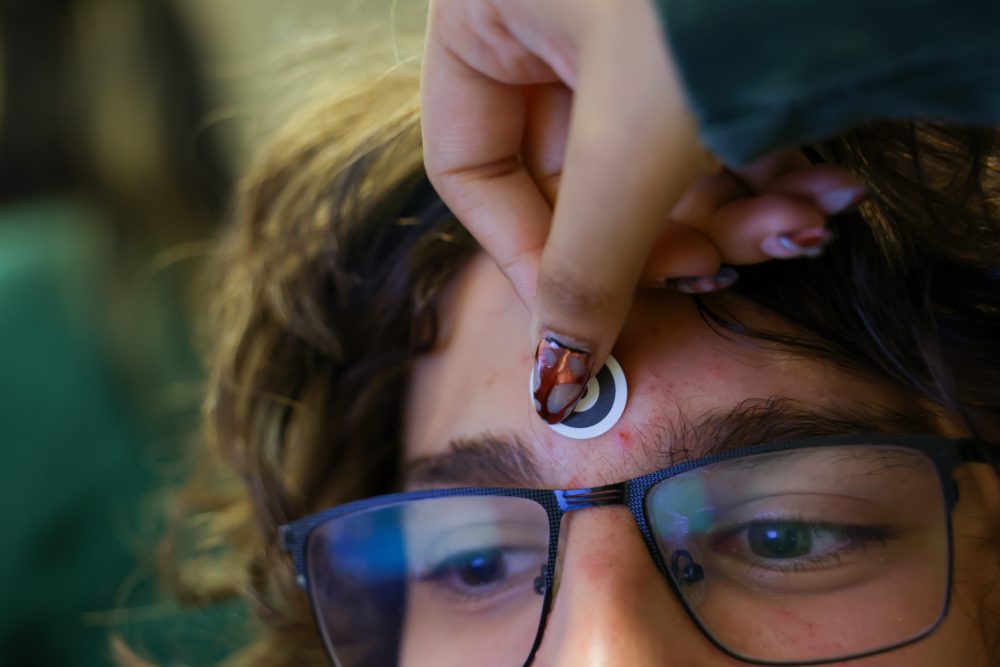
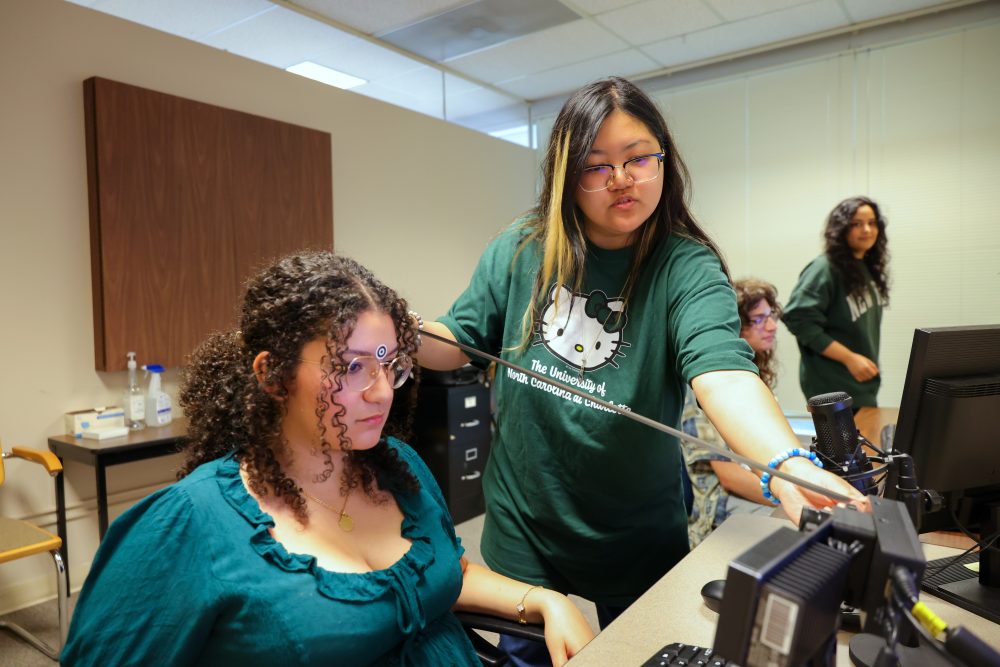
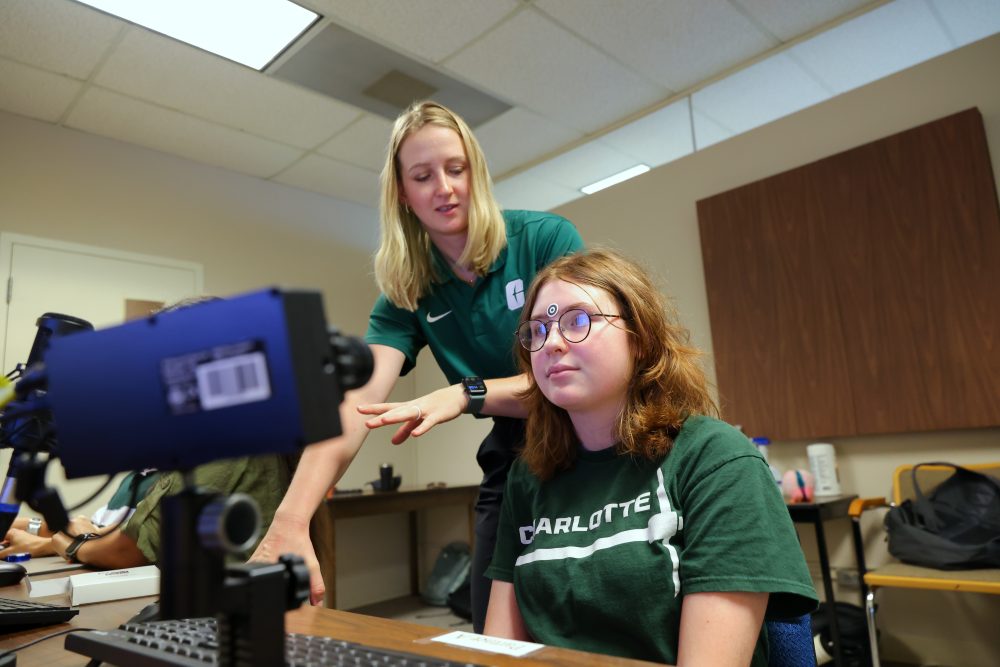
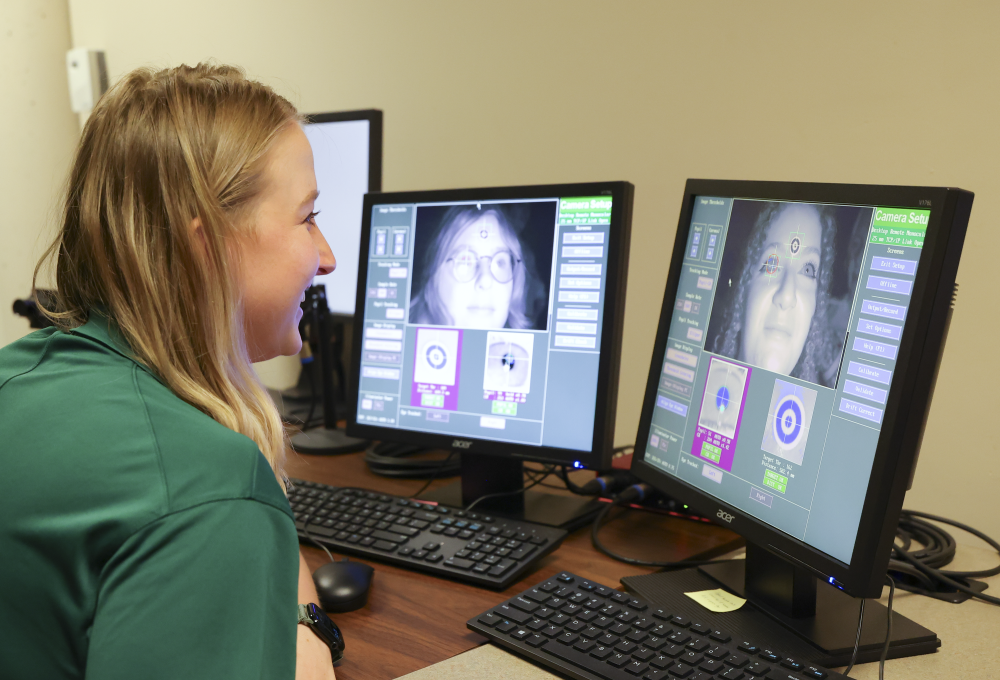
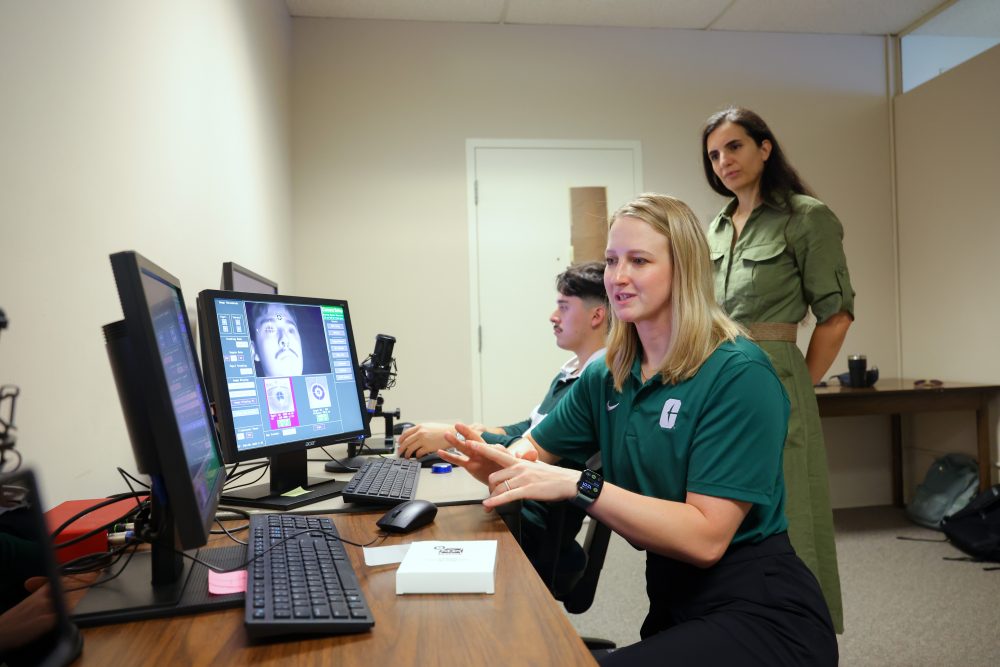
The Cognition in Interaction Lab investigates how communication unfolds across multiple channels, including speech, eye gaze and gesture. A target sticker placed on the forehead gives the eye tracking camera a stable reference point for detecting head movement. The distance from the camera to the subject is measured and set for the software and cameras capture the interactions for analysis.
While research has extensively documented athletes’ perceptions of coaching communication, Wasilewska realized there is comparatively little research exploring coaches’ perspectives and intentions.
“Coaches often have good intentions, and while they are experts in their sport they rarely have access to training in how to discuss body image,” she said. “To truly understand the impact on athletes, we have to look at what coaches actually say and what they intended, rather than just relying solely on athletes’ perspectives.”
Wasilewska hopes the research will lead to future projects that could help develop better resources for coaches, athletes and families, particularly around topics such as body image, nutrition and mental health. Strong guidelines and resources for improved performance communication could help mitigate unintended harm.
“One of the things that’s exciting about Martyna’s work is that it brings cognitive science and sports psychology together,” Galati said. “Those fields don’t often intersect, but communication is central to both.”
Leadership in every room
The fellowship committee also recognized Wasilewska’s commitment to service and leadership. In addition to her academic work, she serves as chief of staff for the Graduate and Professional Student Government and has been active in advocacy efforts affecting international students.
Last year, she helped organize support and raise awareness around proposed changes to international student health insurance requirements across the UNC System. The experience reinforced her belief that students can play an important role in shaping policies that affect their communities.
“One of the biggest lessons I’ve learned is that people can make a difference when they get involved,” she said. “Even raising awareness about an issue can have an impact.”
Galati said those leadership experiences are a natural extension of Wasilewska’s character.
“She’s involved in so many facets of the university,” Galati said. “Whether it’s research, student government, advocacy or mentoring others, she’s always looking for ways to contribute. That’s one of the reasons this fellowship is such a fitting recognition.”
The fellowship’s mission also aligns closely with Wasilewska’s long-term goals. After completing her studies, she hopes to return to Poland and expand access to mental health resources for athletes, particularly women and girls. Her vision includes educational workshops for coaches and athletes and greater awareness of the relationship between communication, performance and well-being.
Wasilewska sees the fellowship not only as recognition of what she has accomplished but also as an investment in what comes next, which is important as she is currently applying to doctoral studies.
“It’s incredibly meaningful,” she said. “It reminds me that people believe in the work I’m trying to do and the impact it can have.”
For Galati, the award highlights both Wasilewska’s promise as a researcher and the opportunities available to students in the Department of Psychological Science.
“This fellowship recognizes academic achievement, leadership and service,” Galati said. “Martyna embodies all of those qualities. We’re very proud of her.”
Wasilewska remains focused on the same mindset that first propelled her as an athlete: continue learning, embrace challenges and keep moving forward.
“Research has given me another way to grow,” she said. “It’s exciting to know that the work we’re doing today could help improve the experiences of athletes and women in the future.”
Written by Jenn Conway
Photos by Kat Lawrence